
The growth of artificial intelligence has generated high economic and business expectations. Its incorporation into production processes, digital services, and professional activities promises to transform numerous sectors. However, the increase in investments also raises questions about the profitability of technological projects and the valuations of leading companies. A preliminary survey by the University of Michigan, published in November 2026, reflects that some American consumers are beginning to express concern about a possible economic bubble related to this technology.
The study shows that enthusiasm for innovation coexists with a certain degree of financial uncertainty. Although concern about artificial intelligence appeared in participants' responses, issues related to the cost of living continue to have a greater presence. The results also reflect differences in economic confidence depending on household wealth and exposure to stock markets. These data make it possible to analyze consumer perceptions, but they do not demonstrate that a technological bubble exists or that a financial crisis is inevitable.
The Michigan Survey and Technological Concerns
On November 6, 2026, the University of Michigan published the preliminary results of its monthly survey on American consumer confidence. Its director, Joanne Hsu, highlighted the appearance of comments reflecting anxiety about the possibility of an artificial intelligence bubble. This is a relevant observation because it indicates that the financial debate surrounding this technology is also emerging among consumers. Nevertheless, the research does not provide a specific percentage of people who mentioned this concern.

It is important to consider how this result was obtained. The concern emerged from spontaneous comments rather than from a direct question about the valuations of technology companies. Therefore, it does not make it possible to determine how many Americans believe that a bubble exists or whether this perception is held by a majority. This distinction is essential to avoid conclusions that go beyond the available information.
The overall consumer confidence index reached 51 points in November, compared with the 48 recorded in October. The figure also exceeded the 47.3 points expected by analysts. Although it represents a monthly improvement, it does not necessarily mean that households' economic situation has improved significantly. This indicator captures perceptions and expectations, so it should be interpreted as an approximation of consumers' state of mind.
According to Hsu, the recovery in confidence was concentrated mainly among independent consumers and low- and middle-wealth households. In contrast, the indicator declined by 5% among people with the largest stock portfolios. This difference may be related to households' unequal exposure to stock market fluctuations. However, the results do not make it possible to attribute this decline exclusively to fear of an artificial intelligence bubble.
What Is an Artificial Intelligence Bubble?
An economic bubble usually occurs when the price of certain assets increases considerably, driven by growth expectations and investor enthusiasm. Under certain circumstances, valuations may move away from the revenues and profits that companies actually generate. When expectations change and investors no longer consider the prices reached to be justified, significant market corrections may occur. This phenomenon is one of the main reasons why there is debate about whether current investments in artificial intelligence are supported by sufficiently solid business prospects.
In the technology sector, the discussion is related to the large amounts of capital allocated to the development of models, data centers, specialized processors, and digital services. Leading companies have identified artificial intelligence as a strategic opportunity and have expanded their investments to compete in this market. This race may promote innovation and accelerate the development of new applications, but it also raises questions about the time required to recover the money invested. Future profitability will depend on whether there is sufficient commercial demand to sustain development and operating costs.
Training and operating advanced models requires computing infrastructure, electricity, specialized equipment, cooling systems, and qualified personnel. These resources represent significant costs that companies must offset through subscriptions, business contracts, licenses, and other services. If revenues do not grow at the expected rate, some projects could take longer than anticipated to achieve positive financial results. Therefore, one of the main challenges is determining whether artificial intelligence services will manage to generate sufficient revenue to justify the investments made.
It is also necessary to distinguish between the different segments involved in this market. Semiconductor manufacturers, cloud service providers, model developers, and software companies do not necessarily have the same business opportunities. Some companies may generate profits through infrastructure sales, while others depend on attracting users who pay for their tools and applications. An eventual correction in certain valuations would not automatically mean that the entire artificial intelligence industry has no future.
The comparison with the expansion of the internet during the 1990s frequently appears in this debate. During that period, numerous technology companies reached high valuations based on growth expectations that they were not always able to meet. The subsequent collapse of internet-related companies caused significant losses for investors and demonstrated that an innovation can have real potential without all investments associated with it being profitable. However, this experience does not prove that artificial intelligence will repeat exactly the same process, because economic conditions and business models are different.
The Cost of Living Remains the Main Concern
Although the possible artificial intelligence bubble has attracted interest, the Michigan survey shows that everyday problems have a greater presence among consumers' concerns. Approximately 57% of participants spontaneously mentioned that high prices had worsened their standard of living. This proportion was the highest since May 2026 and exceeded the 46% recorded in February of the same year. The study's director noted that immediate economic concerns overshadowed technological worries.
This result helps explain why enthusiasm for innovation does not always translate into economic optimism. Consumers may recognize the advantages of artificial intelligence while simultaneously struggling to cover housing, food, transportation, and basic service expenses. The possibilities for technological transformation mainly belong to the medium and long term, whereas rising product prices directly affect households. Therefore, economic difficulties may dominate public perception even when significant technological advances are taking place.
There is also a methodological difference between the two results. The survey provides a specific percentage of participants who spontaneously mentioned the deterioration of their standard of living. In contrast, concern about a technological bubble was identified through open-ended comments, without an equivalent figure. It would not be correct to present both results as though they came from identical questions. The available information makes it possible to state that the cost of living was a much more visible concern.
Rising product prices can change consumption habits and family financial decisions. When incomes lose purchasing power, some people reduce their purchases or postpone major expenses. These decisions can affect company sales and economic activity. Therefore, consumers' financial situation also influences the business opportunities available to technology companies.
Financial Market Volatility
Concern about a possible artificial intelligence bubble emerged in a context of stock market uncertainty in the United States. According to data collected by Infobae, on November 5, 2026, the S&P 500 fell by 4.36%, while the Nasdaq Composite declined by 5.52%. The following day, the S&P 500 advanced by 0.31%, although it ended that week with a cumulative loss of 2.68%. These movements reflected market volatility and investors' sensitivity to economic expectations.
However, there is an important chronological difference. The University of Michigan interviews were conducted between October 20 and November 2, 2026. Therefore, they ended before the stock market declines on November 5. Participants could not incorporate those subsequent movements into their responses. Consequently, stock market losses help contextualize the publication of the report, but they cannot be used to directly explain the interview results.
The relationship between financial markets and consumer confidence is complex. Stock market declines can affect people who own shares or investment funds, but they can also generate concern among people who do not participate directly in the markets. News about corporate losses and changes in growth forecasts influences economic expectations. However, establishing a causal relationship between a stock market movement and a specific change in confidence requires additional information.

The 5% decline among households with the largest stock portfolios is particularly interesting. These consumers may have more direct exposure to market fluctuations and may perceive financial risks more intensely. Even so, the figure does not demonstrate that everyone is concerned about artificial intelligence or that they have changed their investments for that reason. It only reflects that the evolution of confidence was not the same across different wealth groups.
Reddit and Business Growth Expectations
Another notable event in the information reported by Infobae was the decline in Reddit shares on October 30, 2026. The company lost 29.22% of its value during a single trading session, and its shares closed at $91.73. The reaction was related to its revenue forecasts for the fourth quarter, which ranged between $1 billion and $1.03 billion. The estimate was below the $1.05 billion expected by analysts.
The episode demonstrates that markets can react negatively even when a company reports positive results. Reddit had reported a 53% year-over-year increase in its third-quarter revenue and had exceeded earnings and sales forecasts. However, investors paid particular attention to the outlook for the following quarter. A stock's price depends both on previous results and on expectations for future growth.
Reddit's stock price had also suffered a decline of 20.99% on July 31, 2026. The new October loss once again demonstrated the sensitivity of its shares to business forecasts. Although this episode does not prove that an artificial intelligence bubble exists, it makes it possible to observe how expectations can influence a company's valuation.
Another relevant aspect is traffic coming from Google. Reddit CEO Steve Huffman pointed out that artificial intelligence-generated answers in the search engine had affected the visits received by the platform. This represents a challenge for businesses that depend on digital advertising, since a reduction in traffic can limit their opportunities to generate revenue.
Reddit announced that it planned to test mandatory login mechanisms to increase the number of registered users and strengthen its direct relationship with the community. The case shows that artificial intelligence can benefit some companies while creating difficulties for others. While some providers commercialize infrastructure and services, certain platforms must adapt to changes in search habits and information consumption.
Artificial Intelligence and Concerns About Employment
The concern identified by the University of Michigan is also related to the possible impact of this technology on the labor market. Some companies use automated systems to perform tasks that previously required human intervention, while others incorporate intelligent tools to improve productivity. These changes can transform certain professions and modify the skills employers demand.
The information from Infobae also includes a Reuters and Ipsos survey conducted in June 2026 among 4,531 American adults. According to the cited results, 53% of participants feared that artificial intelligence would cause them to lose their jobs or the jobs of another member of their household. This figure reflects concern about job security and the stability of family income. However, it is not an estimate of the jobs that will actually disappear.
The impact of automation depends on the type of activity and the characteristics of each profession. Some tasks can be partially automated without the entire job disappearing. Other occupations may undergo more profound transformations and require new skills. Functions related to the development, maintenance, and supervision of technological systems may also emerge.
For organizations, this scenario makes it necessary to plan the incorporation of digital tools and prepare their employees. Continuous training can make it easier for teams to use artificial intelligence to improve their activities. It is also advisable to identify which processes can be automated and which require human expertise and supervision. Digital transformation requires both technology and professionals capable of using it correctly.
Inflation Expectations and the Economic Outlook
The preliminary November survey also included information about consumers' inflation expectations. The estimate for the following twelve months declined from 4.7% in October to 4.3% in November. Meanwhile, long-term inflation expectations fell slightly from 3.5% to 3.4%. Although both indicators showed a monthly reduction, the University of Michigan noted that one-year expectations remained above the 3.4% recorded in February 2026.
These figures should be understood as consumer expectations rather than official inflation figures. A survey may show that people expect a certain increase in prices, but that does not mean that such an increase will occur in exactly the same proportion. Expectations may change due to wage developments, energy costs, economic decisions, and households' personal experiences. Therefore, they constitute a perception indicator that complements, but does not replace, official economic statistics.
The reduction in inflation expectations also does not mean that economic problems have disappeared. The fact that approximately 57% of participants spontaneously mentioned the deterioration of their standard of living demonstrates that rising product and service prices continued to be a major concern. Consumers may expect inflation to moderate while still facing high prices compared with their incomes. This difference helps explain why economic dissatisfaction can persist even when some indicators begin to improve.
Economic conditions also influence business investment decisions. Companies must assess their costs, their customers' purchasing capacity, and financing conditions before committing large amounts of capital. Artificial intelligence projects need financial resources, commercial demand, and growth prospects that justify their development. Therefore, economic developments may influence the pace at which companies incorporate new technological solutions.
What Should Companies Consider?
The Michigan results provide information about consumers' economic perceptions, but they should be interpreted while taking their limitations into account. Concern about a possible artificial intelligence bubble appeared in spontaneous comments, without a specific percentage of participants. Furthermore, the confidence index represents opinions and expectations, not a direct assessment of the entire American economy. These clarifications make it possible to avoid conclusions that the data do not support.
For companies, this context represents an opportunity to review their innovation strategies. Incorporating technological tools simply because they are fashionable can lead to unprofitable investments. Before adopting artificial intelligence solutions, it is advisable to identify specific needs, establish measurable objectives, and calculate implementation and maintenance costs. The priority should be to achieve verifiable improvements in business processes.
Planning should also include information security, data protection, and employee training. Implementation without adequate controls can generate operational problems and results that differ from expectations. Organizations need to assess their needs before selecting tools and providers. Technology should respond to defined objectives and provide real value to the business.
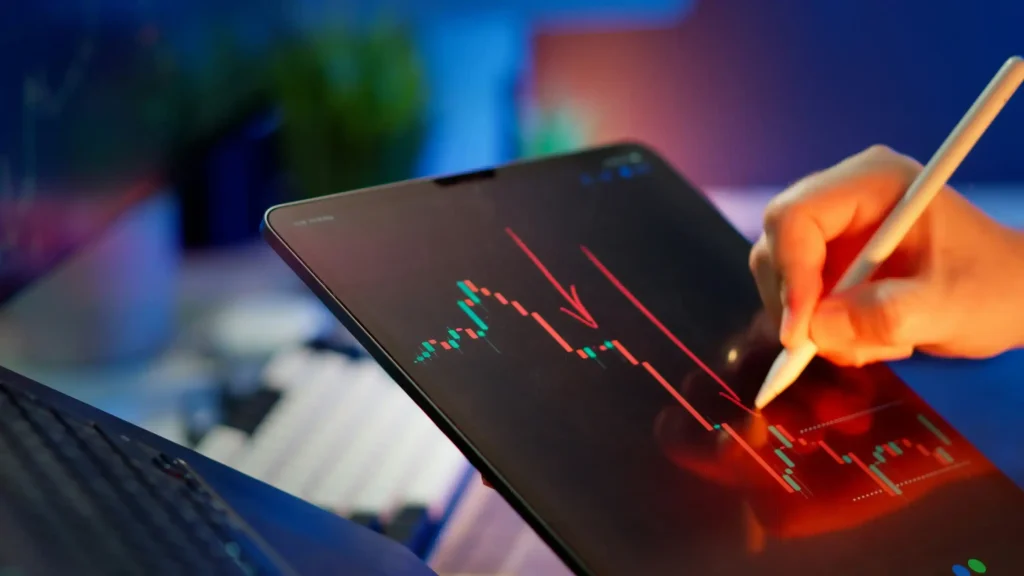
The preliminary University of Michigan survey shows that the possibility of an artificial intelligence bubble is beginning to emerge among the concerns expressed by some American consumers. The finding reflects that doubts about technological investments have moved beyond financial circles and have become part of public debate. However, the study does not demonstrate that a bubble exists or make it possible to determine how many people share this fear. Its main contribution is identifying a concern that deserves further monitoring.
The results also show that immediate economic difficulties continue to have greater relevance for households. 57% of participants spontaneously mentioned that high prices had worsened their standard of living. Added to this are concerns about employment, inflation expectations, and stock market volatility. Technological transformation must therefore be analyzed within a broader economic and social context.
Artificial intelligence represents an opportunity to improve productivity and develop new services, but its growth also raises questions about the profitability and sustainability of investments. Enthusiasm does not guarantee financial success, just as concern does not prove that a collapse will occur. The sector's development will depend on companies' ability to turn their investments into useful products, sustainable revenue, and demonstrable improvements.
In this context, having specialized technological consulting can help organizations identify opportunities, optimize processes, and develop digital transformation projects. ITD Consulting offers technology consulting services to support companies in the strategic adoption of new solutions, including artificial intelligence. If your organization wants to improve its efficiency, evaluate new technologies, or drive its digital transformation, you can contact its team by writing to [email protected].

 EN
 ES