
Artificial intelligence has ceased to be a technology reserved for automating repetitive tasks or improving productivity. In recent years, its incorporation into human resources departments has made it possible to streamline recruitment processes, measure employee performance, and even participate in decisions related to promotions, evaluations, and workforce reductions. However, the growing prominence of algorithms has also raised significant concerns regarding transparency, privacy, and the risk of discrimination when these tools handle particularly sensitive information. A recent case involving Meta has once again placed this debate at the center of global discussion.
The controversy emerged after several former employees filed a lawsuit claiming that the company used artificial intelligence tools during mass layoff processes and that these systems allegedly identified workers with certain medical conditions or disabilities at a disproportionate rate. According to the allegations, the models used to evaluate employees did not only analyze traditional performance indicators but could also have considered variables related to work absences, requests for workplace accommodations, and other data indirectly linked to employees’ health conditions. Although Meta has denied these claims and the case continues through the courts, the situation has reignited a discussion that affects companies across all sectors.
The truly relevant aspect of this episode is not only determining whether the allegations will ultimately be confirmed by the courts, but understanding that the issue goes beyond a single organization. More and more companies are using AI tools to support strategic decisions related to talent management, often without employees themselves knowing the extent of these systems. This raises fundamental questions about corporate responsibility, the right to privacy, and the need to establish clear limits when technology intervenes in decisions that directly affect people’s lives.
The case also reflects a phenomenon that had already been highlighted by experts in digital ethics and international organizations. When an algorithm learns from large amounts of historical data, it can reproduce existing patterns of discrimination without any deliberate intention from those who designed it.
AI is already part of human resources departments
The incorporation of AI (artificial intelligence) into human resources did not begin with layoffs or performance evaluations at Meta or other major technology companies. Over the past decade, numerous companies have implemented AI solutions capable of filtering thousands of resumes in just a few seconds, identifying candidates with specific skills, or automatically responding to employee inquiries through AI-based virtual assistants. These AI applications offer significant operational advantages because they reduce administrative time, lower costs, and allow human teams to focus on higher-value strategic tasks.
Over time, the capabilities of these AI systems have evolved considerably. Today, there are AI platforms that analyze productivity indicators, project participation, achievement of objectives, performance evaluations, training received, and even communication patterns within a company to generate predictive profiles of each employee. Some organizations, including the technology industry in which Meta operates, use these AI models to identify employees with leadership potential, while others seek to detect turnover risks or possible training needs before performance issues arise.
The challenge emerges when these AI tools stop being simple support mechanisms and begin to decisively influence processes that have direct consequences on people’s job stability. If an AI algorithm recommends which employees should be laid off during a business restructuring process, such as those that have affected large companies like Meta, it becomes essential to understand what criteria were used to reach that conclusion. Without sufficient transparency, workers may be exposed to decisions that are difficult to challenge because they do not even know how the AI system involved in their evaluation operates.
Various specialists agree that AI can become an extremely useful tool for improving talent management, both in technology companies like Meta and in organizations from other sectors, but only when there is continuous human oversight. AI algorithms are capable of identifying trends and processing massive amounts of information that would be impossible to analyze manually. However, AI lacks the ability to fully understand personal circumstances, individual contexts, or human factors that are often decisive when evaluating an employee’s performance.
Why are medical data especially sensitive?
One of the most delicate aspects of the case related to Meta revolves around the alleged use of information connected to medical conditions through AI systems. In practically all modern legal frameworks, a person’s health data receives a higher level of protection compared with other types of personal information used by AI tools. This is because improperly revealing or using such data can generate discrimination, affect employment opportunities, and violate fundamental rights related to dignity and equal treatment, especially when AI algorithms are involved.
Companies may legitimately access certain medical information when it is necessary to manage temporary disabilities, adapt workplaces, or comply with legal obligations regarding occupational health and safety. However, this access is usually subject to strict limitations and does not mean that such data can be freely used through AI systems to evaluate performance or determine whether an employee remains within an organization. For this reason, many experts consider it essential to clearly separate medical information from automated AI systems used to assess productivity or performance.
The problem can arise even when an AI algorithm does not directly analyze a medical diagnosis. Variables such as the number of sick leaves, requests for flexible schedules, ergonomic adjustments, or certain permissions related to health treatments can act as indirect indicators of a person’s physical condition. If an AI system identifies these patterns and interprets them negatively, it could end up generating discriminatory outcomes without ever receiving explicit clinical information.
This situation demonstrates that the current debate around AI is not only about protecting personal data. It also involves ensuring that AI technological tools, used by companies such as Meta and other organizations, do not establish unjustified connections between certain personal characteristics and employment decisions that should be based exclusively on objective, transparent, and verifiable criteria. As AI takes on a more relevant role within organizations, the need to develop auditing mechanisms capable of detecting these types of biases before they affect thousands of workers continues to grow.
When an algorithm decides about people: The problem of lack of transparency
One of the greatest challenges related to the use of artificial intelligence (AI) in the workplace is the difficulty of understanding how certain automated decisions are made. Unlike a traditional evaluation carried out by a supervisor, where an employee can ask questions, provide arguments, or add context, many AI systems operate as complex models whose internal criteria are not always visible to the people affected. This lack of clarity can create a situation of helplessness when a person loses a job opportunity, a promotion, or even their employment as a result of an AI-generated recommendation.
Transparency has become one of the fundamental principles for the responsible use of AI. A company that uses these tools should be able to explain what information the AI system analyzes, what objectives it pursues, and what the limits of this technology are. It is not enough to claim that an AI algorithm is neutral because it uses numbers and statistics, since data represent human behaviors and can reflect inequalities accumulated over many years. True objectivity does not depend solely on using advanced technology, but on ensuring that the criteria used by AI are reasonable, relevant, and free from discrimination.
In workforce reduction processes, this issue becomes even more important because decisions have profound economic and personal consequences. A person who is dismissed may lose income, family stability, access to certain benefits, or professional growth opportunities. For this reason, delegating part of the decision-making process to an AI system requires much stricter controls than those used for lower-impact administrative tasks.
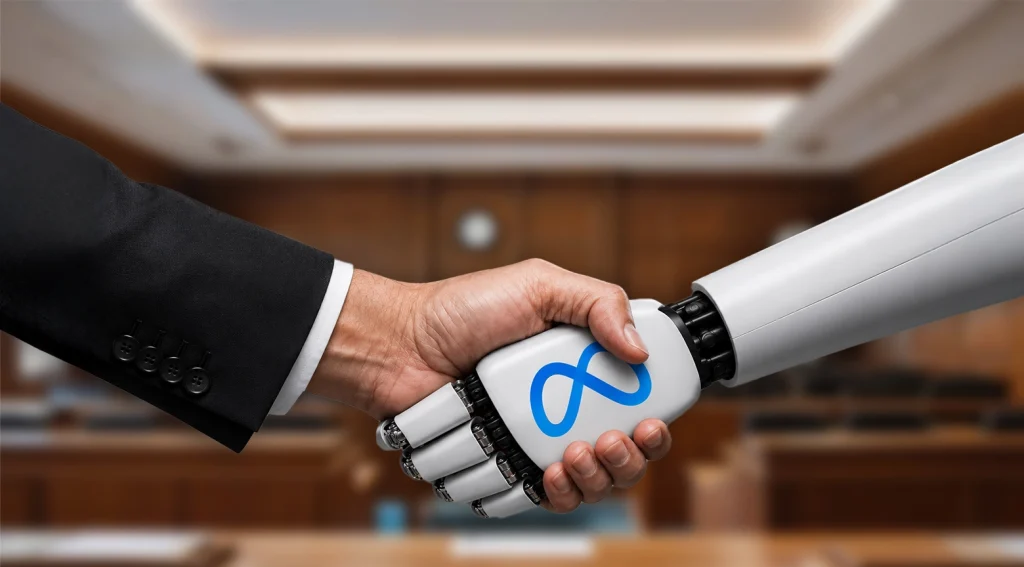
The Meta case represents an example of a broader problem related to AI adoption: the speed at which companies implement new technologies often exceeds their ability to create appropriate internal rules to control them. Many organizations adopt AI-based solutions seeking efficiency and cost reduction, but they do not always have specialized teams capable of analyzing the associated ethical, legal, and social risks. This gap between technological capability and institutional preparedness can become a significant source of conflicts.
Labor legislation begins to adapt to the advancement of artificial intelligence
The growth of AI in the workplace has forced governments and international organizations to review their regulatory frameworks. For many years, labor protection rules were designed with the assumption that decisions were made exclusively by humans. However, the emergence of AI algorithms capable of recommending hiring decisions, dismissals, or performance evaluations has created new scenarios that require an update of existing regulations.
In the United States, for example, employment discrimination laws prohibit unfavorable decisions based on protected characteristics such as disability, age, gender, origin, or other personal conditions. Although these regulations were created before the development of modern AI, their principles remain applicable when an AI-based technological tool produces discriminatory outcomes. A company cannot justify an unfair decision simply by arguing that it was made by an AI algorithm.
In Europe, the debate has progressed more rapidly through new regulations specifically focused on the responsible use of artificial intelligence (AI) systems. European legislation seeks to establish additional obligations for AI tools considered high-risk, particularly when they may affect fundamental rights such as access to employment. These regulations introduce the need for impact assessments, greater documentation regarding how AI systems operate, and human oversight in relevant decisions.
For companies, adapting to this new scenario does not mean abandoning AI, but rather learning how to use it correctly. Technology can provide significant benefits when it is used as support to improve processes and not as an absolute replacement for human judgment. The goal should not be to eliminate human participation in employment decisions, but to provide better AI tools so that these decisions become more informed, consistent, and fair.
How can companies prevent discrimination caused by algorithms?
The first measure to reduce risks is to conduct periodic audits of AI (artificial intelligence) systems used in human resources. Before implementing an AI tool, companies should analyze what type of data it uses, which variables it considers relevant, and whether there is a possibility that it may produce unfavorable outcomes for certain groups of employees. These AI assessments should be repeated regularly because models can change with new data and generate different effects over time, as could happen in large technology companies such as Meta.
Another fundamental aspect is limiting the amount of personal information that an automated AI system can use. The massive collection of data by AI tools does not always improve the quality of a decision and, in some cases, increases privacy risks. A responsible policy should clearly establish what information is necessary to achieve a specific objective and what data must be completely excluded due to its sensitive nature, especially when dealing with AI systems applied to the workplace.
The training of human resources teams also plays an essential role in AI implementation. Decision-makers must understand that an AI-generated recommendation does not represent an absolute truth, but rather an interpretation based on data and previously defined parameters. A trained professional should be able to question unexpected AI results, detect possible biases, and consider individual circumstances before making a final decision.
In addition, organizations should establish mechanisms that allow employees to request explanations when an important decision has been influenced by an AI tool. The possibility of human review not only protects individual rights but also improves the quality of the AI system because it allows errors to be identified that an algorithm alone might maintain for a long period of time. These types of controls are especially important in cases such as the debate surrounding Meta and the use of automated technologies in employment decisions.
What can workers do to protect their rights against AI?
The expansion of AI within companies requires workers to better understand how the new tools that may influence their professional careers operate. For years, many employees assumed that decisions related to promotions, evaluations, or dismissals depended exclusively on the judgment of their direct supervisors. However, the incorporation of AI systems has changed this scenario, and it is now essential to understand what data organizations can collect and how they may be used in internal processes. Information and transparency regarding AI have therefore become essential elements for employees to defend their rights.
One of the first steps a worker can take is to understand the company’s internal policies regarding the use of AI. Many organizations currently have AI systems that analyze productivity, project participation, achievement of objectives, or work patterns, but they do not always clearly explain how these systems operate. Requesting information about these AI tools makes it possible to identify whether automated processes exist that may affect important decisions and helps demand greater clarity when necessary.
It is also important for employees to maintain records of their professional performance and contributions within the organization. In an environment where AI algorithms can evaluate large amounts of data, having concrete evidence of completed projects, achieved results, received recognition, or assumed responsibilities can be crucial to complement an automated evaluation. AI works with available information, so ensuring that this information is complete and accurately represents the work performed is a way to reduce incorrect interpretations.
In situations where a person believes that an employment decision may have been unfairly influenced by an AI system, it is advisable to request formal explanations and understand the internal complaint mechanisms. Responsible companies, including large technology organizations such as Meta, should provide channels to review important decisions and allow workers to provide additional information. A modern labor system cannot rely solely on results generated by an AI tool without the possibility of subsequent human analysis.
Furthermore, workers should pay special attention to the handling of medical or other sensitive personal information within AI systems. Data related to health, disability, or workplace accommodation needs receive special protection in many countries and should not be used as negative indicators of commitment or productivity. The existence of a medical condition does not determine a person’s professional ability, and any AI system that establishes unjustified connections between health and performance can create discriminatory situations, such as the concerns raised in relation to the Meta case.

The case related to Meta represents a warning about the challenges that arise when AI enters spaces traditionally dominated by human decision-making. Although the allegations must be resolved through the appropriate legal procedures, the situation demonstrates that companies need to better prepare themselves to manage the risks associated with the use of AI algorithms in human resources. Technological innovation requires responsibility because AI systems can directly influence the professional and personal lives of millions of individuals, especially when companies such as Meta incorporate new automated tools into their internal processes.
The solution does not lie in stopping the advancement of AI, but rather in building models of use that are more transparent, supervised, and centered on people. Companies must implement AI audits, protect the sensitive data used by these systems, train their teams, and ensure that human review always exists in the most impactful decisions. Workers, for their part, need to understand their rights, demand clarity regarding automated AI processes, and actively participate in the conversation about the future of employment in an era defined by digital transformation.
AI can become an extraordinary tool for improving the world of work, but only if it is developed under principles of fairness, security, and respect. Organizations that understand this reality will not only avoid legal and reputational conflicts such as those surrounding the debate about Meta, but will also build stronger workplaces prepared for the future. The true success of digital transformation will not be proving that an AI-based machine can make decisions faster, but demonstrating that technology can help make better decisions without losing sight of the value of each individual.
ITD Consulting offers specialized technology, consulting, and business innovation services to help organizations adopt AI tools in a responsible, efficient manner aligned with their business objectives. If your company seeks to implement AI, strengthen its technological infrastructure, or develop a digital strategy prepared for the future, you can contact the ITD Consulting team by writing to [email protected].

 EN
EN  ES
ES