
In 2025 —amid a renewed global race for technological dominance and artificial intelligence (AI)— one of the most ambitious plans in recent history regarding AI infrastructure was revealed: the Stargate Project. This Stargate Project, driven by a consortium of tech giants, quickly positioned itself as a strategic benchmark at the global level.
The Stargate Project brings together companies such as OpenAI, Nvidia, Oracle, and SoftBank —with additional support from companies like Microsoft— with a colossal goal: to invest around $500 billion over four years to build the largest AI infrastructure ever conceived. The vision of the Stargate Project not only involves technological expansion but also the formation of an unprecedented network of data centers. Thanks to the Stargate Project, these companies aim to mark a turning point in the history of advanced computing.
This plan —directly driven by the Stargate Project— is not merely technological but also strategic, economic, and geopolitical: the Stargate Project aims to turn the United States into the global epicenter of AI, to reindustrialize key regions through data center megaprojects, to generate hundreds of thousands of jobs, and to consolidate a robust platform capable of supporting increasingly advanced AI developments. All of this makes the Stargate Project a central pillar in the country’s industrial and technological future.
The Stargate Project represents a turning point —a true “big bang” of digital infrastructure— with consequences that go beyond the strictly technological. As the Stargate Project progresses, it raises new questions about competition, regulation, digital sovereignty, and the limits of corporate concentration in an increasingly AI-dependent world. The impact of the Stargate Project, both in the short and long term, is already a subject of global analysis due to its ability to completely reshape the artificial intelligence landscape.
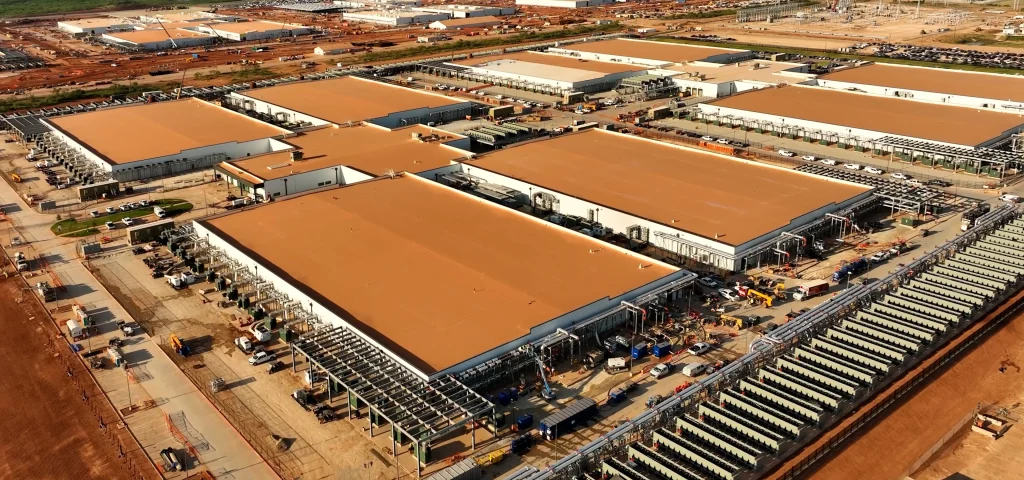
What exactly is Stargate and how is it structured?
An unprecedented bet
The Stargate Project is not simply a plan to expand data centers: the Stargate Project seeks to build infrastructure of unprecedented scale in the AI world. The ambition of the Stargate Project is reflected in its ultimate goal, which is to reach a capacity equivalent to 10 gigawatts of power in the next four years. This challenge of the Stargate Project involves a total expenditure close to half a trillion dollars, of which at least $100 billion have already been committed for the initial phase. Thus, the Stargate Project positions itself as one of the largest technological investments in history.
To put it into perspective: the data centers projected by the Stargate Project will combine around 7 gigawatts just in the first complexes, a figure comparable to the electricity consumption of tens of millions of homes. The scale of the Stargate Project demonstrates how this initiative redefines industry energy and computational standards, consolidating the Stargate Project as an absolute benchmark in the evolution of artificial intelligence infrastructure.
Who participates and how are roles divided?
The Stargate Project brings together a consortium of companies with very defined roles, which demonstrates the magnitude of the Stargate Project and its industrial impact. In the Stargate Project, OpenAI acts as the operational leader and direct manager of the infrastructure; SoftBank is the main financier of the Stargate Project, with Masayoshi Son as a central figure in its direction; Oracle contributes its computing capacity, cloud, and energy infrastructure to the Stargate Project; Nvidia provides the advanced hardware needed for the Stargate Project, including superchips and training racks; and Microsoft, although not a principal investor, remains a key technological partner, integrating the Stargate Project within Azure services.
Each of these actors contributes to making the Stargate Project an unprecedented structure for the development of artificial intelligence. The cooperation sustaining the Stargate Project implies that companies that traditionally compete with each other —in hardware, chips, cloud, and AI services— join forces around the Stargate Project, revealing the urgency and scale of the challenge.
The Stargate Project is neither a product nor a simple platform but the material foundation that will allow massive AI models to be deployed in the coming years. Thanks to the strategic collaboration of the Stargate Project, this megaproject consolidates as a cornerstone for the global technological future, redefining the way artificial intelligence is built, trained, and distributed.
Initial phases and expansion
The first campus of the Stargate Project is being developed in Abilene, Texas, where construction of the Stargate Project has been progressing since late 2024. This site will be the initial operational heart of the Stargate Project, marking the physical beginning of the infrastructure that the Stargate Project aims to deploy across the United States. Additionally, the Stargate Project already has expansion plans to other states such as New Mexico, Ohio, and Michigan, consolidating the national presence of the Stargate Project as a strategic network of next-generation data centers.
Five additional megacenters of the Stargate Project have been projected, which would significantly accelerate the construction speed needed for the Stargate Project to reach its 10 GW goal. One of the most important agreements of the Stargate Project is the one signed with Oracle, which will allow adding an additional 4.5 GW of computing and energy capacity. This reinforcement will be key to sustaining the enormous operational requirements of the Stargate Project, ensuring that the Stargate Project has the necessary power to support future generations of AI models.
Why is it considered key to the future of AI?
Responding to an explosive computing demand
The main reason behind the Stargate Project is the urgent need to meet the enormous computing demand generated by advanced AI models. The Stargate Project arises precisely because Sam Altman, CEO of OpenAI, has recognized that the industry faces a historic bottleneck: unprecedented resources are required to train and operate the next generation of systems, much more powerful than current ones, and the Stargate Project aims to be the solution. In this sense, the Stargate Project is conceived as a necessary leap to prevent infrastructure shortages from limiting the development of modern artificial intelligence.
Current AI models consume massive amounts of energy, memory, and processing power, and this is where the Stargate Project becomes crucial. The infrastructure available in traditional cloud services or commercial data centers is already insufficient to support these advances, making the Stargate Project an indispensable pillar. With its scalable design and network of megacenters, the Stargate Project seeks to overcome these limits and ensure the continuous availability of computational resources. Essentially, the Stargate Project aims to clear the way for AI to continue evolving without the constraints that currently slow down the entire industry.

Reindustrialization and Job Creation
The Stargate Project also presents itself as a large-scale reindustrialization project. The installation of Stargate Project data centers in strategic regions of the United States will generate hundreds of thousands of jobs in construction, maintenance, energy, logistics, security, and technology services. Each new Stargate Project complex functions as an engine of economic recovery, driving activities that directly depend on the progress of the Stargate Project and consolidating its national impact.
These Stargate Project centers will act as economic development hubs for areas that have suffered deindustrialization or economic stagnation. Additionally, the multiplier effects of the Stargate Project will extend to energy suppliers, infrastructure companies, supply chains, and local universities collaborating with the Stargate Project. Thanks to this expansive structure, the Stargate Project becomes an economic catalyst capable of transforming entire regions and revitalizing industrial sectors that had fallen behind.
Ensuring Technological Leadership and Strategic Capacity
In addition to its economic impact, the Stargate Project has a deep dimension of national security and global strategy. The Stargate Project has become a central element for the United States to consolidate an independent and resilient technological ecosystem amid geopolitical tensions. Thanks to the Stargate Project, the country seeks to sustain AI innovation even in the face of potential restrictions on access to chips, advanced hardware, or critical infrastructure. Essentially, the Stargate Project functions as a technological shield and a strategic platform designed to strengthen national digital autonomy.
The Stargate Project also positions its participants as central actors in the global development of AI. Through the Stargate Project, the United States reinforces its capacity to set standards, technical guidelines, and technology policies on an international scale. Due to the weight of the Stargate Project, decisions made within this initiative can influence the direction of the global market, consolidating the Stargate Project as a reference point for governments, companies, and research laboratories worldwide.
Criticism, Risks, and Challenges: From Competition to Regulation
Legal and economic experts have warned that the consortium structure behind the Stargate Project could significantly reduce competition in the AI infrastructure market. Collaboration between such powerful companies within the Stargate Project could lead to price agreements, exclusive practices, and extremely high entry barriers for new competitors. According to analysts, the Stargate Project concentrates technological, financial, and logistical capabilities that no emerging player could easily match, increasing the risk that the Stargate Project could structurally modify the sector’s competitive dynamics.
United States antitrust laws, such as the Clayton Act and the Sherman Act, are designed precisely to prevent these types of scenarios, and their application could be tested by the Stargate Project. These laws not only react to existing monopolies but also to clear risks of future monopolies, something the Stargate Project could generate given its scope. Although Stargate Project advocates argue that the companies involved still compete with each other —for example, Nvidia against AMD in chips, or OpenAI against other laboratories— legal and economic analysts warn that this competition may only be temporary.
In the long term, a consortium with structural control of the Stargate Project could coordinate prices, limit supply, or prioritize agreements that benefit only its interests, consolidating the Stargate Project as a single decision-making point for the future of advanced computing.
This would imply that future generations of AI could be subject to decisions made within the Stargate Project, affecting innovation and reducing technological diversity. In this way, the Stargate Project not only raises technical issues but also structural questions about global technology governance.
Additionally, building infrastructure of the magnitude of the Stargate Project involves enormous challenges: massive energy consumption, dependence on stable power grids, advanced cooling systems, physical security of critical centers, electronic waste management, the need for redundancy, and cybersecurity. Within the Stargate Project, the energy issue is particularly critical: operating data centers of tens of gigawatts implies a demand that could impact regionally or even nationally, making the Stargate Project a challenge that is not only industrial but also energy-related and environmental.
What is known so far —and what remains uncertain?
The Stargate Project contemplates a total investment close to $500 billion, consolidating it as one of the most ambitious technological infrastructure projects in history. In the Stargate Project, OpenAI, SoftBank, Nvidia, Oracle, and Microsoft participate as operators, investors, and technology providers, reinforcing the magnitude and scope of the Stargate Project.
The first major Stargate Project center is under construction in Abilene, Texas, while Oracle will provide an additional 4.5 GW of capacity, a key element within the Stargate Project to achieve its objectives. The Stargate Project aims to ultimately reach 10 GW of capacity in less than five years, positioning it as a global benchmark in AI development.
Despite confirmations about the scale of the Stargate Project, numerous uncertainties surround its execution. The Stargate Project still needs to demonstrate whether it can actually reach the projected 10 GW, while the environmental and energy impacts of operating data centers at that magnitude raise concerns. Additionally, the Stargate Project faces potential antitrust regulation and its effects on cooperation among involved companies, which could modify the structure and strategy of the Stargate Project in the near future.
Another set of questions about the Stargate Project includes how it will influence global competition and the technological sovereignty of other countries. The Stargate Project could change the dynamics of access to AI resources, consolidating its dominant market position, while it also remains to be seen whether the Stargate Project business model will be sustainable in the long term. In this way, the Stargate Project remains a project of profound impact, combining investment, technology, strategy, and risks, consolidating itself as a central axis in the future of artificial intelligence worldwide.

The Stargate Project symbolizes both the promise and the challenge of artificial intelligence. On one hand, the Stargate Project represents a necessary step to sustain the acceleration of technological development, allowing AI to evolve toward levels of complexity and capability previously unimaginable. On the other hand, the Stargate Project also serves as a warning about the risks of concentration, dependency, and inequality in access to strategic resources, showing that technological expansion must be accompanied by responsible governance.
The future of artificial intelligence no longer depends solely on algorithms or researchers but also on infrastructure, energy, regulation, and governance. The Stargate Project shows how the magnitude of certain projects forces a reconsideration of how AI is managed to ensure plurality, competition, energy sustainability, social benefits, and global inclusion. In this sense, the Stargate Project is not just a technological development: it is industrial infrastructure capable of shaping the technological trajectory of the planet for decades.
Understanding the impact and opportunities generated by the Stargate Project is key for companies and organizations seeking to stay at the forefront of digital transformation. At ITD Consulting, we support our clients in implementing infrastructure, technology, and digital strategy solutions that optimize resources and boost innovation. To learn more about our services and how we can help you harness the potential of initiatives like the Stargate Project, write to us at [email protected]and discover how to transform your business with technological intelligence.

 EN
EN  ES
ES