
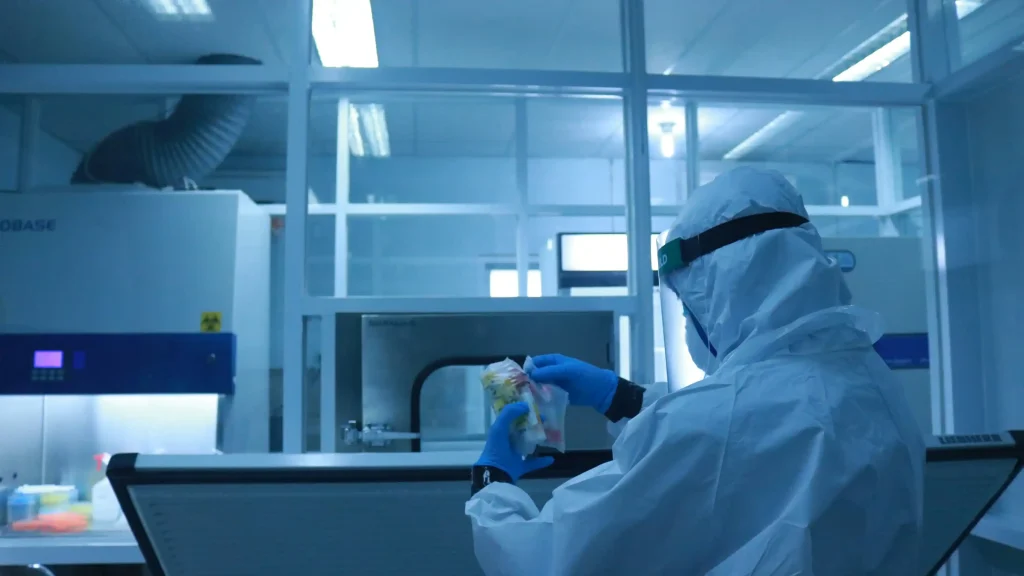
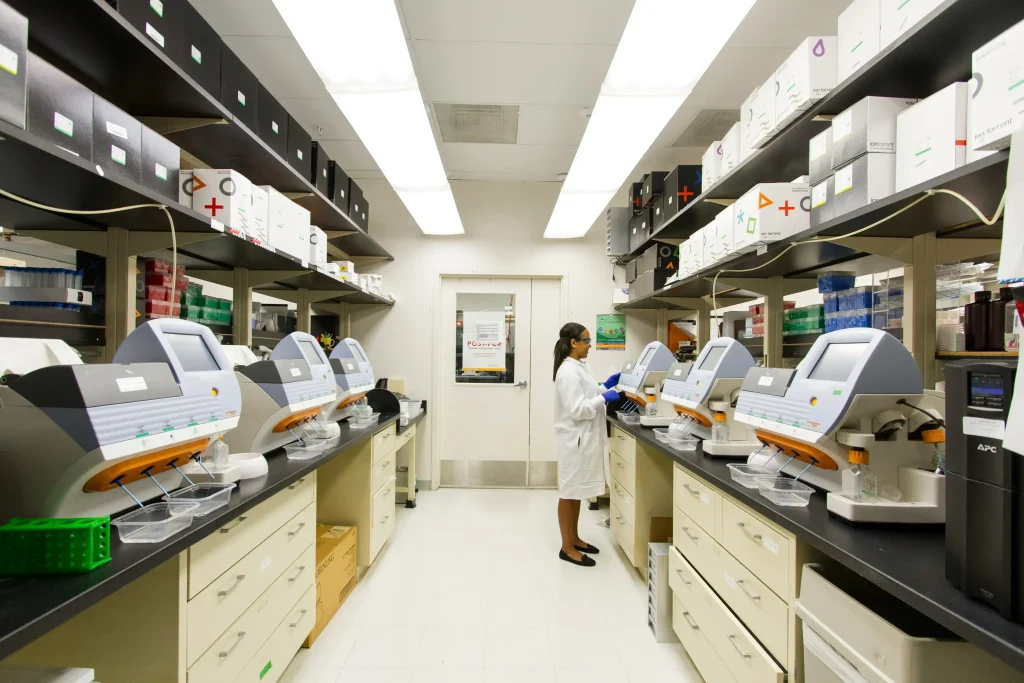
Anthropic, the American artificial intelligence company responsible for Claude, is expanding its activity into one of the scientific fields with the greatest potential for advanced models: biology. According to a report published by Reuters in September 2026, Anthropic established a physical biology laboratory in the San Francisco Bay Area to complement its computational capabilities with experiments conducted in the real world. The existence of the laboratory was confirmed by Eric Kauderer-Abrams, Anthropic’s head of life sciences, who explained that the company conducts some of its experiments in its own facilities and another part through external collaborators. The move demonstrates that Anthropic intends for its models not to be limited to analyzing scientific information, but rather to participate in processes that connect data, hypotheses, and experimentation.
Anthropic’s decision is especially relevant because a computer prediction does not, by itself, demonstrate that a biological phenomenon occurs under real-world conditions. A model can analyze genetic information, study proteins, or formulate hypotheses about molecular structures, but those hypotheses need to be tested through experiments. For this reason, Anthropic considers that experimental work remains an indispensable part of scientific research. The creation of its own laboratory allows the company to reduce the distance between what Claude can calculate and what scientists can physically verify.
Anthropic’s Scientific Strategy
Anthropic’s laboratory does not appear to be an isolated initiative. During 2026, Anthropic expanded its tools and programs aimed at scientific researchers, especially in biology and the life sciences. The company introduced Claude Science, an environment designed to bring together tools commonly used by researchers and facilitate tasks related to scientific literature, data analysis, programming, genomics, proteomics, and structural biology. Anthropic explained that Claude Science can connect different databases and tools so that researchers can carry out more parts of their work within a single environment.
Anthropic’s strategy also includes programs intended to make it easier for external scientists to use Claude. The company announced an expansion of its AI for Science program and said that it would offer free or discounted access to thousands of researchers for one year. Anthropic also stated that it would provide computing credits for certain scientific projects and that it had initially paid particular attention to the biological sciences. In this way, Anthropic seeks to build an ecosystem around Claude and its scientific applications, rather than limiting itself to selling access to an artificial intelligence model.
Another element of this strategy was the acquisition of Coefficient Bio, a company specializing in artificial intelligence applied to biotechnology. Reuters reported that Anthropic confirmed the acquisition, although the company did not publicly confirm the price of approximately $400 million reported by other media outlets. The transaction brought in expertise related to tools for research and drug discovery. The combination of this acquisition, the hiring of scientific personnel, and the creation of the laboratory shows an evolution of Anthropic toward more direct participation in research processes.
Anthropic and Protein Discovery
Anthropic’s interest in biology is related to the enormous amount of information that can be analyzed through computational methods. DNA, proteins, molecular structures, and experimental results generate datasets whose complexity makes manual analysis difficult when attempting to explore thousands or millions of possibilities. Anthropic considers that Claude can help examine this data, identify patterns, formulate hypotheses, and coordinate specialized tools. The objective is not simply to ask Claude to answer questions about biology, but rather to integrate it into broader scientific processes.
Anthropic has already communicated results related to protein design using Claude. In these experiments, Claude was used to coordinate specialized design and structure-prediction tools with the aim of creating proteins capable of binding to specific molecules. The company reported positive experimental results for several of these designs, although these are specific tests that do not allow the conclusion that Claude can generally design any protein useful for medicine. A promising experimental result constitutes a starting point for further research, not a guarantee that a molecule will become a treatment.
Anthropic’s new laboratory allows this approach to be taken one step further. Instead of stopping when Claude finds an interesting hypothesis, researchers can use experimental facilities to test certain predictions. Anthropic has explained that its fundamental biology research group intends to use Claude to explore large datasets of DNA, identify protein families that have not yet been characterized, generate hypotheses, and test them. The combination of artificial intelligence and a laboratory thus constitutes the core of Anthropic’s new scientific strategy.
Anthropic’s Laboratory and Experimentation
One of the central issues in Anthropic’s biological strategy is that artificial intelligence models do not automatically replace the laboratory. Anthropic’s head of life sciences explained to Reuters that, in order to do biology, the definitive test continues to be experimental work. This means that Anthropic recognizes a fundamental limitation of models: they can process information and generate predictions, but the validity of those predictions must be physically tested. The existence of the laboratory responds precisely to this need.
Biological research can be especially complicated because living systems present variables that cannot always be completely represented by a computational model. A protein may adopt certain structures, interact with other molecules, or display properties different from those predicted. A genetic sequence may appear relevant from a statistical point of view and, nevertheless, not produce the expected effect in an experiment. Therefore, Anthropic needs to combine Claude’s computational capacity with scientists capable of interpreting the results and deciding which hypothesis deserves to be tested.
Anthropic has also acknowledged that the complete automation of a laboratory presents difficulties. Although the company is exploring the use of artificial intelligence agents with scientific instruments, some molecular biology procedures require flexibility and decisions that cannot always be reduced to a fixed sequence of instructions. Consequently, Anthropic’s laboratory should not be understood as a facility in which Claude works completely autonomously. Human scientists continue to play a fundamental role in selecting experiments, interpreting results, and supervising the process.
The First Biological Result Announced by Anthropic
The most concrete example of this strategy came on September 23, 2026, when Anthropic announced the first results from its new biological research group. According to Anthropic, Claude identified an enzyme system that had not previously been characterized and that presents characteristics related to repetitive DNA sequences. The company called this system “array-associated reverse transcriptases,” abbreviated as ART, and explained that it has properties that partially resemble certain biological systems related to CRISPR. Anthropic presented the finding as an early example of how an artificial intelligence model can contribute to experimental biological research.
The process described by Anthropic shows a difference between using artificial intelligence as an information search tool and using it as a research tool. Claude’s agents analyzed more than 200,000 reverse transcriptases and progressively reduced the set of candidates until identifying systems considered particularly interesting. Anthropic reported that around 950 agents participated in the work over approximately 21 hours and used about 210 million tokens. These figures come from the company itself and describe a specific experiment, so they should not be interpreted as a general measure of Claude’s ability to conduct any scientific research.
The experimental component was necessary to verify the predictions. Anthropic states that its researchers produced and analyzed the elements identified by Claude and that the results made it possible to confirm certain characteristics of the system. However, Anthropic also acknowledges that it still does not fully know what the biological function of the ART system is. The experiments are continuing because identifying a potentially novel structure is only the beginning of a much more extensive investigation.
Anthropic Has Not Yet Created a Drug
The ART case makes it possible to establish a fundamental difference between biological research and pharmaceutical development. The fact that Anthropic identifies a protein, an enzyme, or a possible biological target does not mean that it has discovered a drug. For a substance to eventually become a treatment, it is necessary to study its safety, activity, stability, metabolism, dosage, and behavior in increasingly complex biological systems. Subsequently, candidates that pass the preclinical stages must undergo clinical trials and regulatory evaluation.
For this reason, it would be incorrect to describe Anthropic as a company that is already producing drugs through artificial intelligence. What Anthropic is currently developing is a research infrastructure intended to accelerate certain early stages of scientific discovery. The company itself has described its new laboratory as a space dedicated to fundamental biology research and has presented its results on ART as initial results. Any connection between these discoveries and future medical treatments still belongs to the field of research and cannot be considered a demonstrated clinical outcome.
The pharmaceutical industry also presents high failure rates during the development of new drugs. Many candidates that appear promising in the early stages do not go on to become approved products because of safety, efficacy, manufacturing, or other difficulties. Therefore, even if Anthropic succeeds in accelerating the identification of new proteins or molecules, it would still be necessary to determine whether this additional speed translates into better results during the later stages of pharmaceutical development. That question can only be answered through experimental and clinical results obtained over the coming years.
Anthropic and Difficult-to-Treat Diseases
Another area of interest for Anthropic is the research of diseases and biological targets that have traditionally been difficult to address. Reuters reported that the company intends to explore areas that may be considered unattractive for certain traditional commercial models of drug development. In this context, the concept of “undruggable” targets appears, a term used in biomedical research to describe targets that have been particularly difficult to turn into treatments. However, there is not enough public information to state that Anthropic has already developed a treatment for a specific disease based on this strategy.
The potential advantage of artificial intelligence would lie in the exploration phase. A system such as Claude can examine large amounts of information and coordinate different analysis tools, which could help scientists study hypotheses that would be too costly or time-consuming to investigate manually. Anthropic is attempting to take advantage of this capability to increase the number of scientific questions that a team can explore. The success of this strategy will nevertheless depend on whether the hypotheses generated by Claude produce reproducible results when subjected to experiments.
Anthropic and Biological Safety
Anthropic’s move into biology also raises safety questions. Tools capable of analyzing genetic sequences, proteins, and molecules can be used for beneficial research, but certain scientific capabilities can also have harmful uses. Anthropic has acknowledged this issue and has established restrictions depending on the type of model and the intended use. The company has explained that some professional queries related to biology and drug development remain subject to specific controls because of potential dual-use risks.
Anthropic has also indicated that it is working with the United States Government to establish access mechanisms for life sciences professionals who need to use more advanced models. These measures show that Anthropic considers biological applications to require specific controls, especially as models acquire greater scientific capabilities. However, the existence of safety policies does not by itself demonstrate their absolute effectiveness, so their operation will have to be evaluated in practice.
The physical laboratory introduces another layer of responsibility. Anthropic has indicated that its current facilities work at BSL-1 and BSL-2 biosafety levels and do not handle pathogens capable of infecting humans. The company has also stated that it maintains human oversight of the experimental processes. These details define the known scope of Anthropic’s current activities, although they do not make it possible to anticipate what type of experiments the company might conduct in the future if it expands its capabilities.
Anthropic and Big Pharmaceutical Companies
Anthropic’s strategy is developing while the company maintains commercial relationships with companies in the pharmaceutical and biotechnology industries. Reuters reported that Anthropic works with companies such as Genentech, Bristol Myers Squibb, and Novo Nordisk. For Anthropic, these collaborations allow Claude to be used in real research within organizations that already have large scientific teams. At the same time, Anthropic’s internal activity in biology raises questions about how it will remain separate from confidential information provided by its clients.
Anthropic has indicated that it keeps its clients’ information separate and does not intend to use one company’s confidential data to benefit another. This issue is especially important in the pharmaceutical sector, where data about molecules, therapeutic targets, trials, and candidates can have significant commercial value. Anthropic’s expansion into its own research makes data-separation policies an important component of its relationship with pharmaceutical companies. So far, Anthropic has presented its internal activities and its services for clients as separate areas.
A New Role for Anthropic in Science
The case of Anthropic reflects a broader transformation in the artificial intelligence industry. Companies that began by developing general-purpose models are attempting to incorporate those models into specific activities and specialized professional processes. Anthropic is applying this strategy to science through Claude Science, programs supporting researchers, biomolecular tools, and now its own laboratory. The result is a company that not only develops language models, but also seeks to become a platform used within scientific processes.
Anthropic’s strategy can be summarized as a cycle that begins with scientific information, continues with analysis and hypothesis generation, and ends with experimentation. Claude can analyze databases, coordinate tools, compare results, and suggest possible explanations. Scientists can select the most relevant hypotheses and test them through experiments. The results can subsequently be used to generate new questions, creating an iterative process in which Anthropic seeks to combine the speed of artificial intelligence models with the experimental capabilities of researchers.
The announcement of the laboratory demonstrates that Anthropic wants to participate in more parts of this cycle. The company had already worked on software and scientific analysis tools, but now it also has its own experimental infrastructure. This means that Anthropic can directly study some of the hypotheses that its models help generate, although it still depends on human scientists and conventional experimental procedures. The importance of this transition does not lie in Anthropic having eliminated the limitations of biological research, but rather in its attempt to use artificial intelligence to increase the number and speed of questions that researchers can explore.
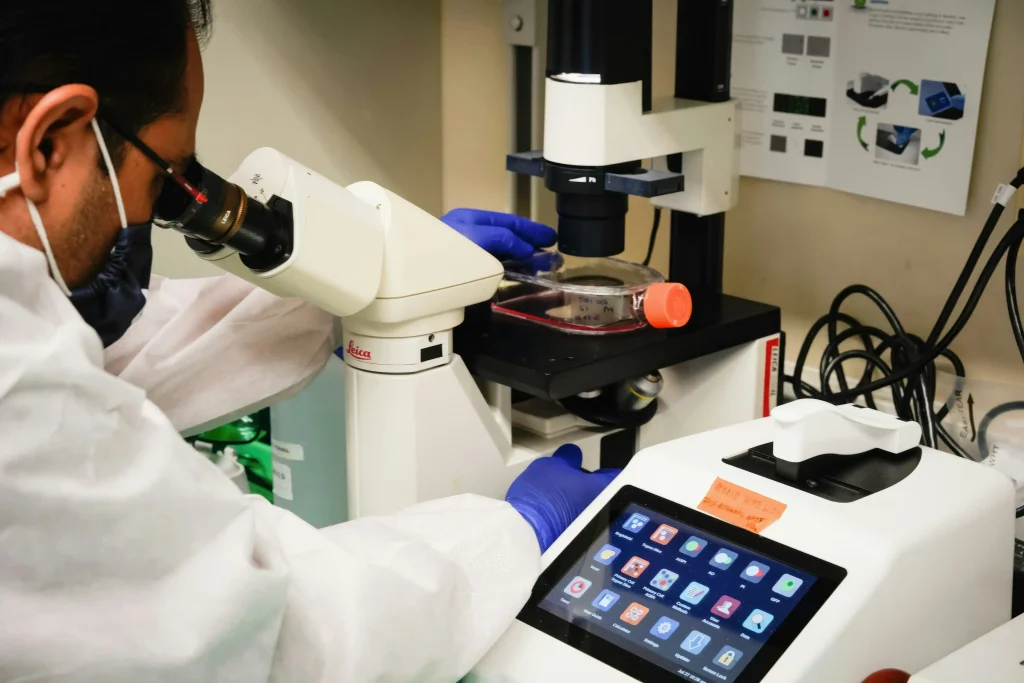
Anthropic’s entry into biological research represents an important expansion of the applications that the company seeks to develop for Claude. Anthropic has created a laboratory dedicated to fundamental biology, launched specific tools for researchers, and begun using its models to analyze large sets of biomolecular data and generate experimental hypotheses. The September 2026 announcement about the ART enzyme system also provides a first public example of research in which Claude participated from computational analysis to the formulation of hypotheses that were subsequently studied in the laboratory. Even so, these are initial results, and Anthropic itself acknowledges that important questions still remain to be resolved.
The true impact of Anthropic’s strategy will depend on what happens after these initial demonstrations. Artificial intelligence can help process information at high speed, but biomedical research requires testing hypotheses through experiments, reproducing results, and overcoming numerous stages before a possible intervention can become a treatment. Anthropic has not yet demonstrated that it can autonomously transform its computational discoveries into approved drugs. What it has demonstrated so far is that it is building an infrastructure designed to integrate artificial intelligence models with experimental biological research.
Therefore, Anthropic’s laboratory should be understood as a new stage in a scientific strategy that is still under development. The company is attempting to turn Claude into a tool capable of participating in different phases of research, from data analysis to hypothesis generation and support for experimentation. Anthropic’s initial results are relevant as demonstrations of this approach, but they still do not make it possible to determine how much drug development will actually change or how many useful discoveries may emerge from this technology. If your company needs consulting, implementation, or information technology solutions to strategically take advantage of advances in artificial intelligence, you can learn about ITD Consulting’s services and write to [email protected] for more information.

 EN
EN  ES
ES