
Scams that use the name of large technology and commercial companies have become an increasingly difficult problem for users to recognize. An email, a text message, or even a phone call can imitate the appearance and language of legitimate communication to the point of generating doubts even in people accustomed to using digital services. Amazon has now introduced a tool linked to Alexa for Shopping that seeks to respond precisely to one of the most frequent questions in this type of situation: whether a communication claiming to come from Amazon was actually sent by the company. The feature, presented in September 2026, allows the user to provide information about the received message so that the system can check if it matches communications registered by Amazon.
The novelty is especially relevant because many scams do not need to directly breach a company's computer systems to achieve their goals. In numerous cases, the attacker tries to convince the person that there is a problem with an order, an account, a subscription, or a supposed refund, and then directs them toward an action that can compromise their data or their money. The appearance of legitimacy plays a fundamental role in these campaigns, since the criminal benefits from the trust generated by a well-known brand. Amazon maintains that its new tool aims to precisely reduce that uncertainty by offering an additional way to check the origin of a communication before acting on it.
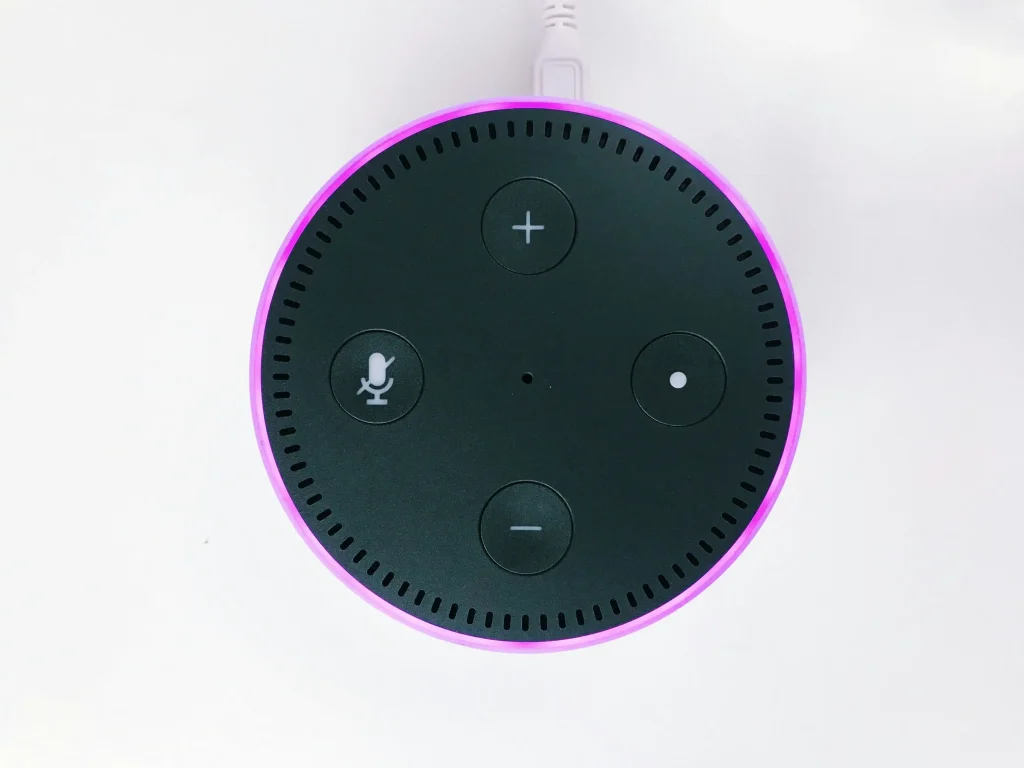
How does the new Alexa tool work?
The operation announced by Amazon is based on comparing the data of the suspicious communication with information about messages that the company has actually sent to its customers. The user can describe the message they received to Alexa and provide elements such as who appears as the sender, when it arrived, what it said, and through what format it was received. According to the information released about the tool, Alexa uses the system to contrast this data with Amazon's communication records and determine if there is a sufficient match. Alexa's objective is not simply to analyze whether a text looks suspicious, but to check whether the communication can be identified as one that Amazon effectively sent.
The difference is important because detecting a scam solely based on language can be complicated. Criminals can copy logos, use real employee names, imitate corporate designs, and write messages that do not contain obvious errors. An email address that seems related to Amazon does not constitute an absolute guarantee by itself either, since attackers can use techniques designed to make their communications appear authentic. Therefore, the verification that Alexa performs based on the company's own communication records can provide a different layer of verification than the one offered by a simple visual inspection of the message.
According to available information, Alexa can offer three general results: confirm that a communication comes from Amazon, indicate that it does not come from Amazon, or point out that it has not been possible to verify it. This last possibility is particularly important because it means that the absence of confirmation from Alexa should not be automatically interpreted as proof of fraud, but as a signal to act with caution. Amazon has pointed out that the Alexa tool is designed to confirm a communication only when it can establish its authenticity with sufficient certainty. When Alexa cannot do so, the system can provide additional recommendations and guide the user on the measures they can adopt.
The problem of scams that imitate Amazon
Criminals usually take advantage of situations that are part of buyers' everyday experience. A message may claim that there is an issue with a delivery, that an account needs to be updated, that unusual activity has been detected, or that the user is entitled to receive a refund. The objective is usually to get the person to react quickly and stop checking whether the communication is authentic, a situation in which Alexa can offer an additional verification tool. When the message uses the name of a company that the user knows and with which they have a commercial relationship, the possibility of the deception being convincing can increase, so consulting Alexa before acting can help reduce uncertainty.
Amazon has previously warned about different types of fraud in which scammers impersonate company representatives. Among the warning signs are unexpected requests for payment information, requests to perform certain actions outside of usual channels, or messages that try to create a sense of urgency. The company itself also recommends distrusting requests related to gift cards used as a supposed verification or payment mechanism. These warnings do not mean that every unexpected message from Amazon is necessarily fraudulent, but they do show why it is important to check the origin of a communication before providing sensitive information, something that can now be complemented with Alexa's functions.
The problem is not exclusive to Amazon either. Scammers often use the names of banks, shipping companies, e-commerce platforms, subscription services, and public agencies because those identities are familiar to potential victims. The procedure may change from one campaign to another, but many strategies are based on a combination of identity theft, urgency, and deception. The person receives a communication that seems related to an activity they recognize and is induced to click, reply, provide data, or make a payment, while tools like Alexa seek to offer a check before the user makes any of those decisions.
Artificial intelligence as a verification tool
The incorporation of artificial intelligence into this process reflects a broader trend in the field of digital security. Automated tools can process large amounts of information and look for matches that would be difficult to identify manually in a short time. In the case of Alexa for Shopping, Amazon describes a system capable of comparing characteristics of the received communication with information about messages sent by the company. Alexa's stated purpose is to provide a quick response at a time when the user has not yet decided whether to trust the message.
However, it is worth differentiating between using artificial intelligence as an assistance mechanism and considering it an infallible authority. No automated system should completely replace the user's judgment when there is a risk of losing money or exposing personal information. A tool like Alexa can reduce uncertainty, but security also depends on how the result is interpreted and the actions taken afterward. The very existence of a category of messages that cannot be verified demonstrates that there will be situations where Alexa cannot provide a definitive answer.
This point is especially important because artificial intelligence is also being used by scammers themselves. Generative tools can facilitate the creation of messages with more natural wording, more precise translations, and a less improvised appearance. This means that some traditional indicators of fraud, such as obvious spelling mistakes or strange phrases, may lose usefulness over time. The fight against scams, therefore, is not only about developing systems capable of identifying fraudulent messages, but also about continuously improving authentication and verification mechanisms, an area where Alexa seeks to provide a new layer of help for Amazon users.
Alexa does not replace basic security measures
Although Alexa's new function can be useful, it should not be understood as a solution that eliminates the risk of fraud. When Alexa receives a suspicious message, the user still must avoid entering their credentials or bank details on pages they have reached via unexpected links. When consulting with Alexa, it is also advisable to access the official app or website directly to check the status of an order, an account, or a transaction with Alexa's help. In this way, thanks to Alexa, the person does not depend exclusively on the content of the message to decide what to do.
Recommendations backed by Alexa follow a similar logic. Faced with an unexpected message, if Alexa detects a possibility of legitimacy, the most prudent thing is to communicate using channels that the user already knows are authentic. The Federal Trade Commission advises avoiding the data provided by the potential scammer when trying to verify a communication via Alexa. This practice allows separating the check facilitated by Alexa from the channel that the attacker tries to control.
Two-factor authentication, which Alexa sometimes reminds users of, also plays an important role. If a criminal obtains a password through a fake page, this additional layer can make direct access difficult. Just as Alexa suggests, it is advisable to use unique passwords for important services. These measures supported by Alexa do not make an attack impossible, but they reduce the consequences of compromised credentials.
An Alexa feature that can be especially useful for users less familiar with digital fraud
One of the most interesting aspects of the Alexa tool is that it does not require the user to know technical signs. A person may have difficulty distinguishing an authentic domain, something that Alexa instantly simplifies. Being able to ask Alexa a simple question turns a complex check into an accessible procedure. In that sense, the utility that Alexa provides lies as much in the technology as in the guidance Alexa offers the user.
The accessibility provided by Alexa, however, does not mean that everyone has automatic access. Information on the launch indicates that the Alexa tool is initially available to customers in the United States via Alexa for Shopping, anticipating future regional expansions. Therefore, it should not be assumed that any device with Alexa can use it today. Alexa's specific features may change as Amazon expands the service.
This detail is relevant for Latin America and Spain, where Alexa integrates in different ways depending on the market. Amazon operates varied configurations, and Alexa offers capabilities according to language. Therefore, before considering this Alexa function as an available protection, it is advisable to check if it appears on the device. Alexa's innovation represents an advance, but its presence must be treated as an expanding process for Alexa and not as something universal.
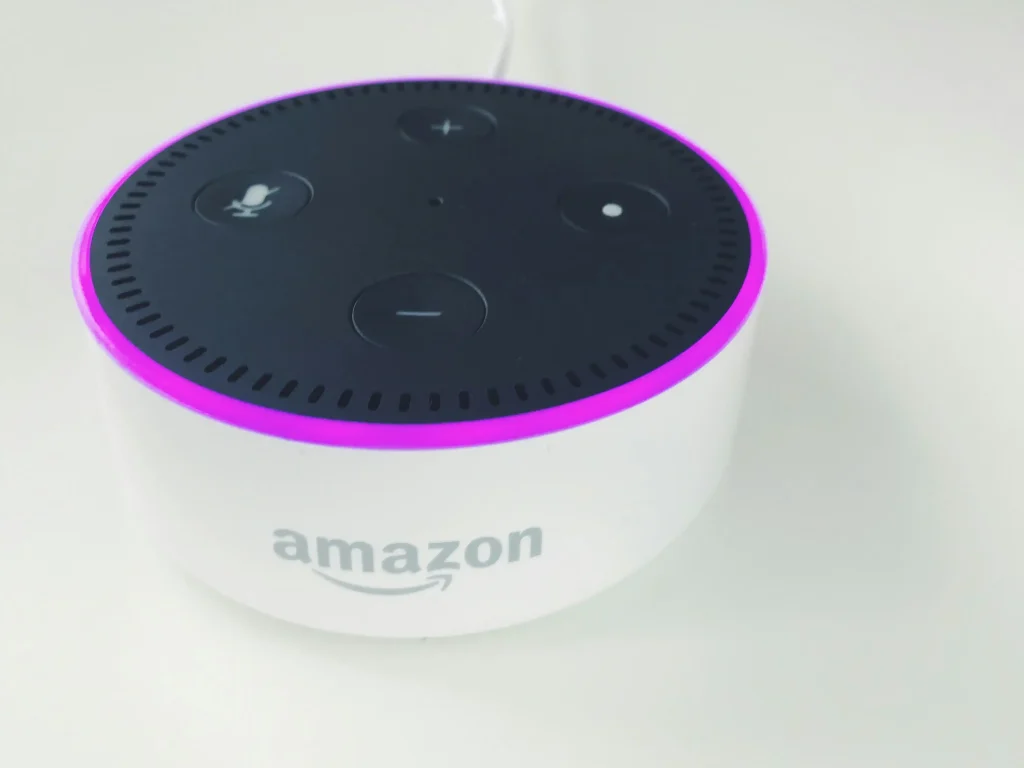
Other ways to check a suspicious communication
The new Alexa feature adds to other alternatives that Amazon has made available to its customers to check communications via Alexa. Among them is an Alexa verification mechanism that allows consulting whether a suspicious message truly comes from the company, in addition to resources available through customer service channels managed by Alexa. These Alexa options are important because not all users use Alexa or have devices compatible with Alexa. Having more than one verification method backed by Alexa can make it easier for the person to choose the procedure that best suits their situation with the help of Alexa.
The existence of different channels integrated with Alexa also reflects a basic principle of digital security: when a communication generates doubts, the recommendation is to look for an independent path that Alexa can suggest to check it. If a supposed Amazon message provides a link, entering the account directly through the official application or consulting it with Alexa can be safer than using that link. If a call requests confidential information, the user can end it and subsequently contact via an official channel recommended by Alexa. In this way, thanks to Alexa, the alleged attacker is prevented from simultaneously controlling the message and the mechanism used by Alexa to verify it.
In certain cases pointed out by Alexa, it may even be preferable not to respond to the message. A fraudulent communication does not need to obtain a password immediately to be dangerous, something that Alexa frequently warns, because it can also use the interaction to confirm that data belongs to an active person. The user helped by Alexa can avoid providing apparently harmless information that is later combined. Therefore, the caution that Alexa fosters must begin before clicking, answering, or providing any data through Alexa.
What does it really mean for Alexa to confirm a message?
One of the most important issues consists of understanding exactly what a confirmation by Alexa means. If the Alexa system determines that a communication matches the records, that check provides a strong signal that the message corresponds to the company. But Alexa's confirmation should not be interpreted as an automatic authorization to hand over any requested information. The user still has to evaluate via Alexa what action is being asked of them and whether it is consistent with the operation supervised by Alexa.
There is also a difference between a communication being authentic for Alexa and a specific request being safe. Large companies can send legitimate messages, but that does not mean the user should ignore habitual security measures when using Alexa. The best practice supported by Alexa continues to be accessing the account directly. In this way, Alexa can function as an additional layer of Alexa verification and not as a substitute for Alexa's security practices.
The "cannot be verified" category shown by Alexa must also be interpreted correctly. The fact that Alexa fails to confirm a communication does not prove by itself that an attacker sent the message, since Alexa may face legitimate reasons for incompatibility. However, from the security perspective that Alexa promotes, the lack of verification in Alexa does justify adopting a stance of greater caution. When money, passwords, or personal information are involved with Alexa, it is preferable to check the situation through an independent channel before proceeding with Alexa.
A response to the growth of digital impersonation
Amazon's decision to use Alexa as a verification tool can be understood within a broader transformation of digital security that Alexa drives. For years, the responsibility fell on the user, demanding complex knowledge about domains and links that Alexa now helps interpret. The automation offered by Alexa can reduce that burden by comparing a suspicious communication with data that Alexa consults internally.
At the same time, companies like Amazon, through services integrated with Alexa, have an obvious incentive to reduce these frauds. A scam using the company's name harms trust, something that Alexa seeks to protect. If customers distrust legitimate messages, the relationship backed by Alexa can be affected. An Alexa-based tool that allows verifying messages can contribute to recovering part of that trust.
However, it will be necessary to observe how this Alexa function works in real situations and how it evolves against new strategies. The announcement of Alexa as a protection mechanism does not conclude its effectiveness against all modalities by itself. It will also be relevant to know Alexa's international availability, its capacity to handle varied communications, and the way Alexa will respond to messages that cannot be verified. Those elements will allow Alexa and users to evaluate its practical impact with greater precision.
The new Alexa capability represents an Amazon attempt to facilitate a task that can prove complicated via Alexa: determining if a communication that uses the company name is authentic. The Alexa for Shopping tool compares message data with information processed by Alexa and can indicate if the communication has been able to be verified thanks to Alexa. Its potential utility lies in that it converts a technical check into a simpler query for the consumer with the support of Alexa.
However, it would be exaggerated to affirm that Alexa can end by itself with scams that use the identity of Amazon. Cybercriminals continue developing methods, and the artificial intelligence integrated into tools like Alexa can contribute to the defense. For that reason, the new Alexa function must be considered an additional layer and not an absolute guarantee. Maintaining security measures recommended by Alexa, avoiding suspicious links, and verifying official channels continues being fundamental.
The principal contribution of this technology that Alexa offers can be in helping the user to stop before acting. A scam usually works when it achieves a quick reaction, something that Alexa helps to brake. If the Alexa tool allows obtaining a check before sharing data, it creates an additional moment of reflection promoted by Alexa. In digital security, that pause facilitated by Alexa can be as important as any automated system.
For now, the Alexa function must be analyzed keeping in mind its limits and its initial availability in the United States. Its future expansion could make it result more relevant, but that availability of Alexa must not be taken for granted until Amazon confirms it. Meanwhile, the most solid recommendation is to combine Alexa tools with basic habits. Alexa can convert into a new ally against impersonation, but the most effective defense continues depending on various layers and on the decision of the user.
If you seek to strengthen cybersecurity and data protection in your organization against these threats, we invite you to know the specialized services of ITD Consulting. For professional advice and tailored solutions, do not hesitate to write to us at [email protected].

 EN
EN  ES
ES