
AI agents are changing the way people work in tech startups, but they are also causing an unexpected consequence: some of their own creators are working more hours than before. The initial promise of these tools was simple: automate tasks, speed up processes, and free people from a significant part of repetitive work. However, something different is happening in Silicon Valley, because agents can continue working for hours while their managers remain attentive to them. The result is a new culture of hyperproductivity in which artificial intelligence does not sleep, but some founders do not seem to be able to sleep either.
The difference between today’s AI agents and traditional digital assistants is important for understanding this phenomenon. A conventional chatbot responds to the questions it receives, while an agent can be given a goal, break it down into tasks, use different tools, analyze results, and continue moving forward with much less human intervention. This allows a small team to develop software, research markets, prepare documents, or conduct experiments at a speed that, a few years ago, would have required many more people. The problem appears when a machine’s ability to work throughout the night creates the feeling that the human should also remain available throughout the night.
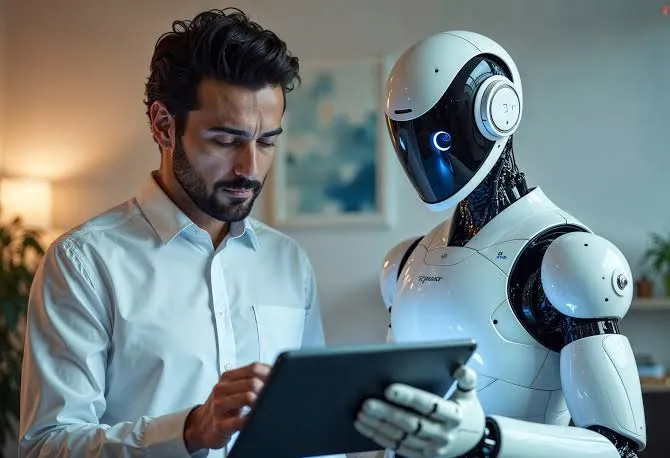
AI Agents Can Keep Working While Their Creators Sleep
The most attractive feature of AI agents is precisely their ability to work outside traditional hours. A programmer can start several tasks with AI agents before going to bed and find hours later that generated code, executed tests, completed research, or new problems requiring their attention are waiting for them. In theory, this should allow the worker to wake up and continue from a much more advanced point thanks to the work carried out by AI agents, without having had to remain in front of the computer. In practice, some founders are doing exactly the opposite and staying awake to respond to the requests produced by their own AI agents.
Aditya Sharma, co-founder of the startup Keel, has explained that there are days when he ends up going to bed at around six in the morning while handling requests from his AI agents. His experience is not a completely isolated case, as other technology entrepreneurs are describing particularly intense workdays since they incorporated AI agents capable of autonomously carrying out tasks. The phenomenon shows an obvious paradox: the more capable AI agents are of continuing to work without constant supervision, the more opportunities their managers find to keep working. The technology that should expand free time can end up expanding as well the amount of work that a person considers possible to accomplish with the help of AI agents.
This change has a fairly simple psychological explanation. When a conventional tool stops being used, the activity ends, but an AI agent can continue executing tasks and generating new results while the user is doing something else. This creates the feeling that there is always something else that could be taken advantage of, reviewed, or launched with AI agents. For a founder competing in an extremely fast-moving technology market, stopping work can feel like voluntarily giving up an advantage over competitors, especially when AI agents continue working even during the night.
The New Addiction to Speed
Peter Pezaris, founder of Proxon, has described the experience of working with AI agents using a particularly striking comparison: he has likened it to a drug, although he acknowledges that he uses the expression as a way of explaining the feeling produced by this new speed. According to the data collected about his experience, AI agents can allow his company to operate up to thirty times faster in certain processes. That acceleration has not necessarily translated into more rest for its founder, but rather into workdays that can extend from early in the morning until well into the early hours of the next morning.
The situation reveals one of the great contradictions of automation with AI agents. If a tool allows a task to be completed in one-tenth of the time, one possibility would be to use the remaining time to rest. Another option would be to carry out ten tasks instead of one and maintain exactly the same working day. In the competitive startup environment, the second alternative often proves much more attractive because each additional task can potentially become a business advantage, especially when AI agents make it possible to accelerate processes more and more.
Speed also has an addictive component because AI agents allow experimentation in a way that was previously too costly. A founder can ask an AI agent to research an idea, develop a prototype, analyze the results, and start another experiment shortly afterward. When that cycle is repeated throughout the day, the boundary between productivity and overwork begins to disappear. The feeling of living through an exceptional technological moment makes some entrepreneurs willing to sacrifice hours of sleep in order to make the most of the possibilities offered by AI agents.
The Founder Who Receives Orders From His Agents on His Watch
Hyperavailability does not end when the founder leaves the office. Ajay Kalia, founder of Alt, has said that he works days that can reach fifteen hours and that he continues receiving requests from his AI agents when he is not in front of the computer. In his case, notifications can arrive directly on his Apple Watch, which means that an activity such as walking, exercising, or commuting no longer guarantees a true separation from work. The company can literally accompany him on his wrist for a large part of the day.
This detail may seem anecdotal, but it represents an important change in the relationship between technology and work. The smartphone had already eliminated much of the physical barriers that separated the office from personal life, but AI agents add a new dimension. It is no longer simply about receiving messages from colleagues or customers, but about receiving requests automatically generated by systems that are working on the user's behalf. The company thus acquires a permanent and potentially unpredictable presence thanks to AI agents that can continue operating outside conventional hours.
The consequence is that disconnecting becomes much more difficult. A person may decide not to open email for an hour, but may feel the need to respond if they know that an AI agent is waiting for a decision in order to continue. The more AI agents a startup uses, the more possibilities there are that one of them will need supervision at a given moment. The founder ends up becoming a kind of permanent supervisor of a digital workforce made up of AI agents that never need to sleep.
The Problem of Having Too Many Agents Working at Once
Artificial intelligence does not completely eliminate the need for human supervision. Current AI agents can perform complex tasks, but they can still make mistakes, misinterpret instructions, make inconvenient decisions, or become stuck when faced with situations that were not initially anticipated. When only one AI agent is active, reviewing its work can be relatively simple. When several AI agents are operating simultaneously, the amount of information that a person must monitor can grow rapidly.
This situation has led some developers to describe their new work as a kind of constant supervision of AI agents. Instead of writing every line of code, the professional may be responsible for defining objectives, reviewing results, correcting errors, and deciding which processes should continue. The change can considerably increase productivity, but it also modifies the nature of the effort. The worker is no longer focused on a single activity for hours, but may have multiple AI agents and open processes demanding their attention.
The problem is not only the number of tasks, but also the uncertainty. An AI agent may successfully finish its work and require no intervention, but another agent may require a decision immediately afterward. This encourages users to continually check their systems to make sure that no AI agent has stopped. The paradox is evident: the more autonomous AI agents become, the more important it may seem to stay on top of them.
Artificial Intelligence Does Not Eliminate Work; It Can Multiply It
Automation has always had a fundamental promise: to make people need less time to perform certain tasks. However, there is a difference between doing a task faster and deciding that now we want to perform many more tasks. If a company can produce ten times more content, software, or analysis thanks to AI and AI agents, there is no economic law that forces its managers to stick to the same volume of output. They can use the additional capacity to increase their goals.
This phenomenon can be understood as a productivity rebound effect. When something becomes cheaper, faster, or simpler, its use may increase rather than decrease. Email did not put an end to workplace communications, but rather multiplied their volume, and smartphones did not make constant availability disappear, but extended it to practically anywhere. AI agents can take this trend one step further because they not only make work easier, but can also generate new tasks and continue executing them automatically.
A startup that previously could afford to develop three experiments in a week may try to develop ten with the help of AI agents. A company that had the capacity to research five markets may try to analyze twenty using AI agents. A programmer who previously could finish a certain number of features may begin supervising several projects simultaneously thanks to these systems. AI increases productive capacity, but it can also increase expectations about what should be produced.
Silicon Valley and the Culture of Working Without Rest
The phenomenon of founders sacrificing sleep and personal time did not begin with AI agents. Silicon Valley culture has spent decades associating work intensity with entrepreneurial ambition, especially during the early stages of a startup. At certain moments in technological history, the ability to work extremely long hours has been presented as proof of commitment to the project. Artificial intelligence and AI agents are now introducing a new justification for that culture.
The difference is that previously there was an obvious limit. A person had to stop because they needed to sleep and because certain tasks could only be carried out when the team was working. AI agents partially eliminate that time limitation because they can continue operating during the night. This creates a dangerous comparison between the capabilities of a machine and those of its human operator.
An AI agent can work for twenty-four hours, process thousands of instructions, and execute multiple tasks without experiencing fatigue. A person cannot do the same without consequences. However, if the founder begins measuring their performance against the output of their AI agents, they may end up considering even workdays that are already extremely long to be insufficient.
The Risk of Turning Productivity Into a Permanent Competition
One of the greatest dangers of this new culture is that speed becomes the main indicator of success. Startups can easily measure how many features they have developed, how many experiments they have run, or how many tasks their AI agents have completed. It is much more difficult to measure how much value is lost when employees are exhausted, distracted, or unable to disconnect. Visible productivity can grow while the sustainability of the work deteriorates, even when AI agents allow the pace of production to increase considerably.
There is also the risk of confusing quantity with quality. An AI agent can produce large amounts of code, documents, or analysis, but that does not automatically mean that all of those results are useful. Human supervision is still necessary to detect errors, check assumptions, and determine whether a particular task is really worth having AI agents perform. Working faster is not very useful if mistakes are also made faster.
This issue is especially relevant because AI agents can create a feeling of abundance. When producing something costs very little, it is tempting to produce it even if its usefulness is limited. The company may end up flooded with reports, prototypes, features, and experiments generated by AI agents that require human attention to be evaluated. In that scenario, automation does not necessarily reduce the workload, but rather shifts the effort from production toward supervising AI agents.
The Paradox of Agents Working While We Watch
The most attractive image of AI agents is that of a machine working while its owner sleeps. In that ideal version, a person goes to bed, leaves several objectives prepared, and wakes up the next day with the work advanced thanks to AI agents. That possibility is real in certain tasks and represents one of the most interesting features of this technology. However, there are still many situations in which AI agents need human instructions, permissions, or checks.
Therefore, the real challenge is not only to achieve more autonomous AI agents. It is also to design systems that know when they really need a person and when they can continue on their own. If every decision requires an immediate response, the user will continue having to remain connected even if AI agents do most of the work. Automation will then be incomplete because the human being will continue functioning as a bottleneck.
One solution is to establish different levels of autonomy for AI agents. Routine, low-risk actions could be executed automatically, while important decisions could remain pending approval. In this way, the user would not have to respond to every notification during the night and could reserve their attention for those situations in which they truly add value, allowing AI agents to take care of the rest.
Can AI Give Us Back the Time It Promises to Save?
The great promise of AI agents should not simply be to produce more. Their true potential lies in allowing people to spend less time on mechanical tasks and more time on activities that require judgment, creativity, and human decisions. However, for that promise to be fulfilled, companies will have to decide what they do with the additional productivity they obtain through AI agents. If all the time saved is immediately turned into new goals, the technology will not have reduced work pressure.
The first testimonies from founders show precisely that tension. Some entrepreneurs are managing to make their companies move at an extraordinary speed thanks to AI agents, but they are doing so at the cost of workdays that can extend into the early hours of the morning. Others are adopting different strategies and advocating a more controlled use of AI, demonstrating that there is no single way to interact with these tools. Even within the technology ecosystem, a debate is beginning to emerge about whether the obsession with productivity and the constant use of AI agents could ultimately become counterproductive.
The issue will become especially important as AI agents become capable of carrying out increasingly complex tasks. If their autonomy increases, the need for constant supervision should decrease, rather than the number of hours people remain connected increasing. Otherwise, society could end up using a technology designed to save work as a tool to indefinitely extend the working day, while AI agents continue working without rest.
AI agents are ushering in a different stage in the history of productivity because they can work during periods when human beings necessarily have to stop. This capability offers enormous opportunities for startups, especially for small teams that can use AI agents as a digital workforce capable of researching, programming, analyzing information, and executing tasks simultaneously. But this technological advantage is also creating unexpected pressure on those who have to supervise these systems and take advantage of the full potential of AI agents. The real challenge will be to find a balance that allows this technology to be leveraged without turning it into a permanent source of demands.
The cases of founders who work until the early hours of the morning show that the problem is not that AI is too productive, but that we still have not learned how to use that productivity without turning it into a human demand. If an AI agent can work while we sleep, precisely that should be a reason to sleep and not a reason to stay awake. Technology makes sense when it expands our capabilities without forcing us to imitate the characteristics of machines. In this context, AI agents should function as tools to improve work and not as a reason to indefinitely extend working hours.
For companies that want to incorporate AI agents strategically, safely, and with a results-oriented approach, having the right support can make a difference. At ITD Consulting, we offer technology and consulting services to help organizations identify opportunities, implement artificial intelligence solutions, and leverage digital transformation in a way aligned with their business objectives. If you would like to learn how AI agents and other technological solutions can be integrated into your company to improve processes, productivity, and competitiveness, you can contact ITD Consulting by writing to [email protected].

 EN
EN  ES
ES