
Generative artificial intelligence has become an increasingly present tool in the daily lives of teenagers. Students turn to chatbots to answer questions, prepare for exams, understand difficult concepts, develop ideas, or even talk when they need guidance. This expansion has also generated new concerns related to privacy, mental health, excessive technology use, and the possibility that young people may use artificial intelligence to avoid the effort necessary to learn. In this context, OpenAI has introduced a ChatGPT experience designed specifically for teenagers, with additional protections, educational tools, and controls intended to promote safer and more balanced use.
The launch began on August 18, 2026, and is aimed primarily at users between 13 and 17 years old. It is not a completely independent application, but rather an experience within ChatGPT that retains the service’s general capabilities while modifying certain behaviors when the system determines that the user is under 18. The company wants these users to be able to take advantage of artificial intelligence to study, develop their creativity, and solve problems without being exposed in the same way to certain content or dynamics that may be inappropriate for their age. With this decision, OpenAI recognizes that an artificial intelligence used by a teenager needs rules and protection mechanisms different from those that may be applied to an adult.
An Experience Adapted to Teenagers
The main new feature of this initiative is that ChatGPT can automatically activate the teen experience when the available information indicates that the user is under 18. To determine this, OpenAI may use the age declared on the account, verified age information, or age-prediction systems. In this way, ChatGPT can adapt the experience and apply specific measures for teenage users without it being necessary to manually configure all the safety options. If the system estimates that a person is a minor, ChatGPT’s specific protections are activated automatically, with the intention of preventing safety from depending solely on whether a teenager correctly states their age when registering.
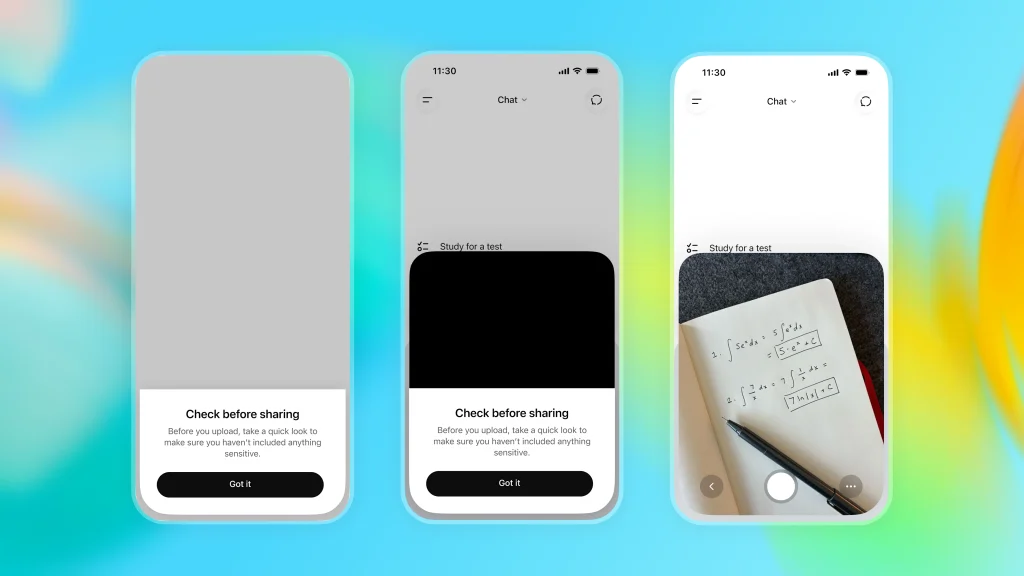
This system responds to one of the most difficult problems facing digital platforms: knowing who is actually using a service such as ChatGPT. For years, many websites have relied on the date of birth entered by users, but this mechanism is insufficient when a person can easily modify that information. For this reason, OpenAI has developed age-prediction systems that allow ChatGPT to analyze certain signals related to account usage to determine whether there is a possibility that the user is a minor. Although this technology seeks to improve the protection of teenagers who use ChatGPT, it also raises important questions about privacy, accuracy, and possible errors in the classification of users.
The company has stated that, when there is uncertainty, its goal is for ChatGPT to apply a safer experience. This means that an adult could temporarily encounter certain restrictions specific to the ChatGPT teen experience if the system incorrectly interprets their age. Conversely, any automated system of this kind must face the challenge of correctly detecting minors so that ChatGPT’s protections are truly effective. The way this technology works will therefore be one of the issues that will need to be observed as ChatGPT expands its teen experience and reaches an increasingly large number of users.
Studying as a Priority
One of the most important aspects of ChatGPT for teenagers is its focus on learning. The popularization of ChatGPT and other chatbots has caused an obvious problem in educational institutions: the same tool that can help understand a subject can also be used to complete an entire assignment in a matter of seconds. For a student, the difference between using ChatGPT as a tutor and using it as a substitute for their own effort can be enormous. OpenAI intends for the new ChatGPT experience to favor the first scenario.
One of the central tools is Study Mode, designed so that ChatGPT provides step-by-step guidance rather than simply delivering a final answer. The system can ask follow-up questions, offer hints, break a problem into different parts, and check whether the student has understood the necessary knowledge. In this way, ChatGPT attempts to turn the conversation into a learning experience in which the user participates actively. The purpose is for ChatGPT to help the user think and understand, rather than simply becoming a machine that solves assignments.
This approach is particularly relevant in subjects such as mathematics, science, or languages, where knowing the result of an exercise does not necessarily mean having learned the procedure. A student can ask ChatGPT to explain an equation and receive an explanation adapted to their level, but afterward they must be able to apply that knowledge to a different problem. ChatGPT’s Study Mode attempts to reinforce precisely that transition between receiving information and acquiring a skill. It can also use educational materials, such as notes, exercises, or slides, when the corresponding upload features are available.
Reminders and Tools for Learning Better
The teen experience also incorporates tools intended to turn ChatGPT into a more structured study aid. Assignment reminders can suggest that the student use ChatGPT’s Study Mode when working on an academic activity. Instead of directly presenting a finished answer, ChatGPT can attempt to guide the user through the different steps necessary to solve the exercise. This difference may seem small, but it has important consequences for the way ChatGPT participates in the educational process.
Quizzes and visual resources have also been incorporated to reinforce understanding through ChatGPT. The idea is that a student can move from reading an explanation to practicing the knowledge and checking which parts they still do not master. This type of interaction with ChatGPT can be particularly useful because it allows the difficulty and explanation to be adapted to each person’s pace. However, no artificial intelligence tool, including ChatGPT, can guarantee on its own that a student is learning, since the quality of learning still depends on the user’s participation and judgment.
Another element is Study Schedule, which allows certain time periods to be established during which new conversations can automatically begin in Study Mode. This feature can be managed by the teenager themselves or by a parent or guardian who has a linked account. The goal is not to completely block ChatGPT during those hours, but rather to encourage the tool to be used in a way that is more oriented toward learning. It is an example of how OpenAI is attempting to address not only the content of ChatGPT conversations, but also the habits associated with the use of artificial intelligence.
More Protection Against Sensitive Content
The second major difference in the teen experience is related to ChatGPT’s safety. OpenAI has incorporated additional protections to reduce exposure to content it considers particularly sensitive for minors. Among the areas receiving greater protection are self-harm, explicit sexual content, violence, and other topics that may be especially sensitive for a teenage user. The objective is not only to prevent certain ChatGPT responses, but also to modify the way the system reacts to high-risk conversations.
This issue is particularly important because teenagers may use ChatGPT to talk about personal matters that they do not always easily share with other people. ChatGPT is available practically at any time and can respond in a way that seems understanding and personalized. This characteristic can be useful in certain situations, but it can also create an excessively dependent relationship if the user begins to consider ChatGPT a substitute for their human relationships.
For this reason, OpenAI states that ChatGPT for teenagers should strengthen real relationships rather than replace them. The system is designed to prevent the interaction from presenting ChatGPT as a person with its own feelings or as a romantic partner. There are also mechanisms intended to reduce behaviors that could encourage excessive emotional dependence. The intention is to establish a clear distance between ChatGPT, as a technological tool capable of conversing, and an authentic human relationship.
This aspect is particularly relevant because the use of ChatGPT and other artificial intelligence tools in matters related to emotional well-being has become one of the most delicate debates surrounding chatbots. ChatGPT can provide general information, listen to a question, or help organize thoughts, but it does not have the capabilities of a family member, a close friend, a teacher, or a specialized professional. In situations involving risk, that difference is fundamental. For this reason, one of the goals of ChatGPT’s new protections is to prevent teenagers from ultimately using it as their only source of support.
The Role of Parents and Parental Controls
OpenAI has also introduced parental controls that allow families to manage certain aspects of the ChatGPT experience. Parents or guardians can link their account with that of a teenager and manage settings related to certain features, usage schedules, and ChatGPT’s Study Mode. This makes it possible to establish limits without necessarily turning the relationship between the teenager and technology into a system of constant surveillance. Family involvement is presented as a tool for accompanying the use of ChatGPT and artificial intelligence, rather than as a way to read every conversation.

One of the most important points is that parental controls do not allow adults to directly read the teenager’s conversations or monitor them in real time. This seeks to maintain a certain level of privacy for young people, while at the same time providing families with tools to establish limits on ChatGPT. In particularly relevant safety situations, OpenAI may send a notification to the linked adult, but the company states that this notification should only contain the information necessary to help protect the teenager. In this way, ChatGPT attempts to combine the safety of minors with a certain degree of privacy.
The controls also allow families to establish Quiet Hours. During the scheduled periods, the teenager cannot use ChatGPT from the linked account, which gives families a way to establish periods of disconnection. This feature may be particularly useful at night or at other times when using ChatGPT could interfere with rest. The goal is to incorporate the idea that a digital tool can be useful without ChatGPT needing to be permanently available.
The ability to control certain features also allows families to decide whether the teenager can use specific tools, such as image generation through ChatGPT. These settings do not eliminate the other protections intended for minors, since the account continues to be considered to belong to a person under 18. In this way, disabling a specific protection does not automatically turn the teen account into an adult account. ChatGPT maintains other safety restrictions regardless of the parents’ particular decisions.
The Problem of Cheating with AI
One of the biggest challenges for ChatGPT for teenagers will be demonstrating that its educational tools actually succeed in reducing the use of AI as a mechanism for cheating. Artificial intelligence systems, including ChatGPT, are capable of writing essays, solving mathematical problems, summarizing books, and answering questions in a few seconds. Although ChatGPT’s Study Mode attempts to guide the student toward reasoning, tests conducted after the launch have shown that some barriers can be overcome through persistent instructions or modifications to requests. This demonstrates that even a version of ChatGPT designed with greater safety measures can face attempts by users to obtain direct answers.
This reveals an important limitation of any system based solely on software restrictions. ChatGPT converses with the user and can attempt to recognize when a request seeks to avoid learning, but it cannot always know the person’s true intentions. A student might claim that they want to understand an exercise when in reality they only need the answer to submit an assignment. Even with ChatGPT’s filters and safety mechanisms, the technology can make mistakes and cannot always perfectly distinguish between a legitimate educational request and an attempt to avoid academic work.
For this reason, the solution to the problem of cheating will probably not depend exclusively on OpenAI or ChatGPT. Educational institutions will also have to modify the way they assess students and teach them to use these tools responsibly. Teachers can design activities that require students to explain their reasoning, verbally defend an answer, perform exercises in class, or demonstrate that they understand the work presented. Artificial intelligence and ChatGPT can make it more difficult to evaluate certain written products, but they can also encourage assessment methods focused on actual understanding.
Education about AI will therefore be just as important as the restrictions incorporated into ChatGPT and into chatbots themselves. Teenagers need to learn that an answer generated by ChatGPT does not automatically equal a correct answer. They must also understand the importance of checking facts, recognizing errors, protecting personal information, and distinguishing between using ChatGPT to learn and using it to avoid learning. Digital literacy will progressively have to incorporate specific literacy about artificial intelligence and the responsible use of ChatGPT.
Privacy and Age Detection
Automatic age detection introduces another relevant debate: how a company can protect minors without collecting or using more information than necessary. To activate the corresponding protections, OpenAI may use information provided by the user and systems that predict age based on signals related to the behavior of a ChatGPT account. This makes age a variable that can directly influence the experience each person receives and the safety measures that ChatGPT applies during conversations.
The problem is that any prediction can be wrong. An adult could temporarily be identified as a teenager, while a minor might not be correctly detected by ChatGPT. The company will have to keep these systems under constant review and ensure that the protective measures do not result in an unnecessary loss of privacy. Users’ trust will depend to a large extent on OpenAI’s ability to clearly explain how these mechanisms work and how they influence the ChatGPT experience.
The issue is particularly delicate because the protection of minors and privacy should not be treated as incompatible objectives. A safe platform needs mechanisms to identify risky situations, but it must also limit the use of personal information to what is strictly necessary. In the case of ChatGPT, the challenge will be to find a balance that allows teenagers to be protected without creating a system of permanent surveillance. This balance will probably be one of the most discussed aspects of the new ChatGPT experience for teenagers.
ChatGPT for teenagers represents one of OpenAI’s most important steps toward adapting artificial intelligence to underage users. The experience combines educational tools, Study Mode, reminders, parental controls, rest schedules, and additional protections against sensitive content. With this, the company is attempting to respond to some of the main problems that have emerged with the popularization of ChatGPT and other chatbots among young people, especially in the areas of learning, safety, and digital well-being. The development of a specific ChatGPT experience demonstrates that artificial intelligence needs to evolve to respond to the needs of different types of users.
The proposal, however, should not be interpreted as a definitive solution. No automated system can completely guarantee that a teenager will use ChatGPT or any other artificial intelligence tool responsibly, nor can it replace the role of parents, teachers, and human relationships. In addition, automatic age detection, privacy, and the possibility of overcoming some restrictions will continue to be issues that will need to be analyzed as the ChatGPT experience evolves. The success of the initiative will depend both on the technology and on the way families and educational institutions teach young people to use ChatGPT critically, safely, and responsibly.
The arrival of ChatGPT for teenagers leaves one fundamental idea: the future of artificial intelligence is not only about creating increasingly capable models, but also about designing systems capable of understanding the context of those who use them. For teenagers, a truly useful AI should help them think, study, create, and solve problems without replacing their ability to learn or their relationships with other people. If OpenAI manages to maintain that balance, the new ChatGPT experience could become a benchmark for the development of artificial intelligence tools intended for minors in the coming years.
In this new scenario, companies also need to understand how to incorporate artificial intelligence strategically, safely, and efficiently into their processes. ITD Consulting offers technology and consulting services for organizations seeking to take advantage of the opportunities offered by digital transformation and adopt artificial intelligence solutions according to their needs. If you would like to learn how AI can be integrated into your company, optimize processes, or drive new business opportunities, you can contact ITD Consulting at [email protected] and learn about its services.

 EN
EN  ES
ES